Why Choose an Electric Drive Motor for Your Business?

Time:2026-11-03 Author:Sophia
0%

For many businesses, an electric drive motor is more than a component behind a rotating shaft. It can shape energy costs, production reliability, and equipment maintenance. The opportunity is significant: the International Energy Agency’s 2011 report, Energy-Efficiency Policy Opportunities for Electric Motor-Driven Systems, estimated that these systems used about 45% of global electricity. That figure is a broad, older estimate, not a promise of savings for any one facility. Still, it highlights why motor selection deserves careful attention.

In a packaging plant, for example, a motor that runs conveyors through long shifts may affect energy use every hour. In a warehouse, smooth speed control can help match equipment output to changing workloads. The right Electric Drive Motor depends on the application, operating hours, load profile, and service conditions. Efficiency ratings matter, but so do installation quality and controls. The U.S. Department of Energy’s motor-systems guidance emphasizes evaluating the complete system, rather than the motor alone. A high-efficiency motor paired with poorly matched equipment may deliver less benefit than expected.

There is no universal best choice. That is worth remembering. Businesses should compare lifecycle costs, confirm technical requirements, and review credible test data before investing. Initial purchase price is visible; downtime and energy use accumulate quietly. A thoughtful decision can support dependable operations, but only when the motor fits the work.
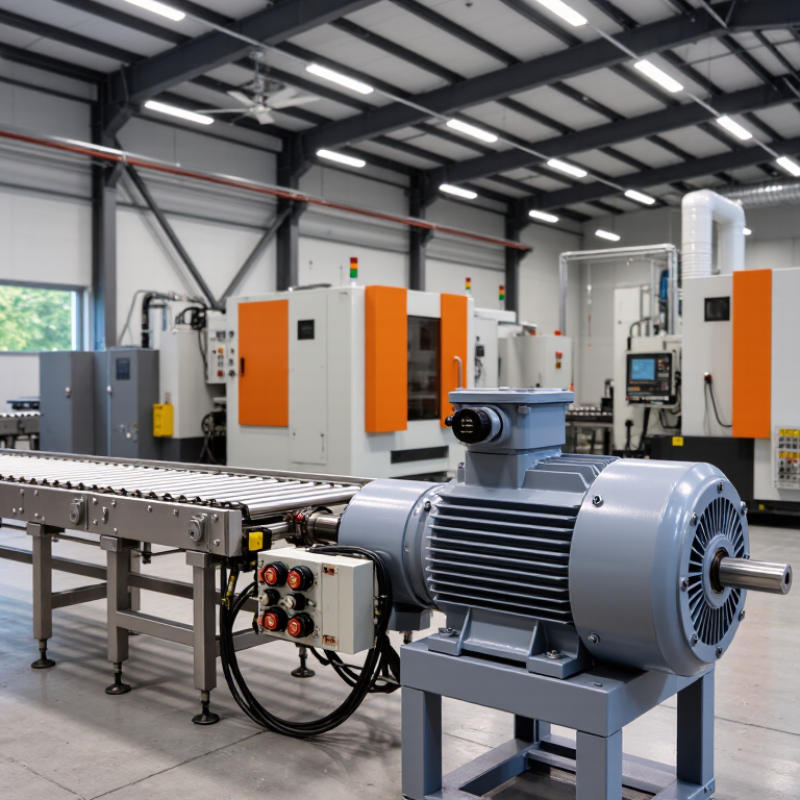
Why Choose an Electric Drive Motor for Your Business?

What an Electric Drive Motor Is and How It Converts Power into Motion

An electric drive motor converts electrical energy into mechanical motion. In a common AC induction motor, current in the stator creates a rotating magnetic field. That field induces current in the rotor, producing torque. The rotor turns a shaft, which can drive a pump, conveyor, fan, or vehicle wheel. The motion is simple to picture: a shaft begins rotating, and a connected machine follows.

A drive system often includes a controller or inverter. It adjusts the electrical supply, helping regulate motor speed and torque as operating needs change. For a business, that can mean matching a pump’s output to demand instead of running it constantly at full speed. But savings depend on the whole setup, including load, controls, and maintenance. The motor alone is no guarantee.

The U.S. Department of Energy’s U.S. Industrial and Commercial Motor System Market Assessment reports that motor-driven systems account for about 68% of electricity use in U.S. manufacturing. The International Energy Agency’s analysis of motor-driven systems puts their share at roughly 46% of global electricity consumption. Those figures explain why motor selection matters. Still, percentages can feel abstract on a factory floor. A warm motor casing, a vibrating mount, or a pump cycling too often may reveal more about a specific installation. Real systems are rarely perfect. A careful review of operating hours and load patterns is a better starting point than assuming every electric drive will cut costs.

Why Motor Efficiency Matters: DOE Reports Motors Use 54% of U.S. Manufacturing Electricity

Why Choose an Electric Drive Motor for Your Business?

Why Motor Efficiency Matters: DOE Reports Motors Use 54% of U.S. Manufacturing Electricity

The U.S. Department of Energy’s 2021 U.S. Industrial and Commercial Motor System Market Assessment Report estimates that motor systems consume 54% of U.S. manufacturing electricity. That share turns a motor choice into an operating-cost decision. The International Energy Agency has also estimated that electric motor-driven systems use about 45% of global electricity. These figures describe a large opportunity, but not an automatic saving.

An efficient electric drive motor can reduce energy waste, especially when paired with a variable-speed drive for loads that often run below full capacity. Think of a pump throttled for most of a shift: controlling speed may use less power than restricting flow with a valve. Yet savings depend on the load profile, controls, maintenance, and operating hours. Measure before replacing equipment. Check nameplate data, current draw, and actual run time; a spreadsheet alone can miss a stubborn machine that cycles unpredictably. Efficiency matters. So does fit. DOE’s motor-system guidance emphasizes looking beyond the motor itself, since the driven equipment and control strategy affect overall performance. A careful assessment may reveal that the best upgrade is not the biggest motor, but a better-matched system.

How IEC IE3 and IE4 Efficiency Classes Guide Motor Selection

An electric drive motor can run pumps, fans, conveyors, and compressors for long shifts. Its efficiency class helps estimate how much electrical input is needed for a given mechanical output. IEC IE3 is the premium-efficiency class; IE4 is the super-premium class. For comparable motors within the standard’s scope, IE4 generally has lower losses than IE3. The difference is real, but it does not guarantee a fixed percentage of savings in every installation.

Check the motor’s rated power, speed, duty cycle, and operating hours before comparing classes. A motor running near full load most of the day may justify the higher purchase cost of IE4 sooner than a lightly used standby unit. Look at the nameplate and technical documentation, and confirm that the selected motor suits the drive, supply, enclosure, and starting requirements.

Heat matters. So does the actual load. In the field, a motor may spend much of its time below its rated output, which can change the economics. That detail is easy to overlook, and efficiency class alone cannot reveal it.

When Variable-Speed Drives Improve Process Control and Energy Use

A variable-speed drive lets an electric motor match its output to changing process demand. Instead of running at full speed and relying on a valve or damper to restrict flow, the motor can slow down when less capacity is needed. On a cooling-water pump, for example, a drive can respond to a changing temperature signal and adjust flow more gradually. The process gets closer control. That matters. It can reduce pressure swings, oversupply, and unnecessary wear on connected equipment. Conveyors and ventilation fans can also benefit when production rates or airflow requirements vary during a shift.

Energy use may improve when a motor spends less time delivering power the process does not need. The actual result depends on the equipment, operating pattern, and control settings; it is not automatic. A drive added to a poorly matched system may bring little benefit. Engineers should check the motor’s load profile, required speed range, and response to changing demand before selecting one. They should also review heat, electrical compatibility, and maintenance needs. Tuning takes time, and the first settings are not always right. Operators may need to adjust them after watching how the process behaves under real production conditions.

How to Compare Lifecycle Cost, Reliability, and Emissions Before Choosing

Compare motors over the same service period, not by purchase price alone. Estimate energy use from measured load, operating hours, electricity rates, and the machine’s speed profile. Add installation, controls, cooling, maintenance, and replacement costs. Measure the whole shift. A motor running lightly for hours may not deliver savings suggested by its rated efficiency. Use duty-cycle data where possible; a nameplate estimate can miss frequent starts, partial loads, or high ambient temperatures. Include downtime, too: a drive failure can cost more in lost production than in replacement parts.

Assess reliability in the conditions the motor will actually face. Check whether its bearings, insulation, enclosure, and cooling suit dust, vibration, or washdown. Review maintenance intervals and local repair options. Warranty coverage is not uptime. For emissions, estimate electricity consumption and apply a grid emissions factor; include manufacturing only when comparable data is available. Results depend on location and accounting boundaries. A more efficient motor may still have a higher upfront footprint, while grid intensity can change over its service life. Keep assumptions visible, compare them with utility bills and maintenance logs, and update the estimate when operating conditions change.

FAQS

Why does motor efficiency matter in manufacturing?

Motor systems are estimated to use 54% of U.S. manufacturing electricity. Even small efficiency gains can affect operating costs.

Can an efficient motor automatically reduce energy bills?

No. Savings depend on the load, operating hours, controls, and maintenance. Measure actual use before replacing equipment.

What should a business check before upgrading a motor?

Review the nameplate, current draw, and run time. A spreadsheet may miss a machine that cycles unpredictably.

When can a variable-speed drive help?

It can help when demand changes often. A pump, fan, or conveyor may need less output during parts of a shift.

How can a drive improve pump control?

It can slow a pump as demand falls, rather than restricting flow with a valve. This may reduce pressure swings and oversupply.

Does a variable-speed drive always save energy?

No. Results depend on the equipment and operating pattern. A poorly matched system may gain little.

What should engineers assess before choosing a drive?

Check the motor’s load profile, needed speed range, electrical compatibility, heat, and maintenance requirements.

Why might drive settings need adjustment?

Real production conditions can differ from expectations. The first settings may be wrong. Operators may need to tune them after observing the process.

Conclusion

An Electric Drive Motor converts electrical power into mechanical motion, making it a core component in many manufacturing and commercial processes. Choosing the right motor can have a substantial impact on energy use: the U.S. Department of Energy reports that motors account for 54% of the electricity consumed by U.S. manufacturing. Efficiency classes such as IEC IE3 and IE4 offer a useful way to compare motor performance and identify options that may reduce electricity consumption over time.

The best choice depends on more than efficiency alone. A variable-speed drive can improve process control and help avoid using more power than a task requires, especially when operating conditions change. Before selecting a motor, businesses should consider its purchase and operating costs across its expected service life, as well as reliability, maintenance needs, and emissions associated with energy use. Balancing these factors helps match the motor to the application and supports dependable, cost-conscious operation.

Sophia

Sophia

Sophia is a dedicated marketing professional with an exceptional depth of knowledge about her company's products and services. With a keen understanding of market trends and customer needs, she crafts insightful blog posts that not only inform but also engage readers, enriching the company’s online......