What Is a Low Profile Gear Motor?

Time:2026-09-27 Author:Mason
0%

Modern machines are becoming smaller, faster, and more automated. The motor cannot simply occupy more space.

A Low Profile Gear Motor combines a compact electric motor with a reduction gearbox. Its flattened housing delivers torque while preserving valuable installation height. Picture a conveyor beneath a packaging line: there may be only 60 millimeters between the belt and its frame. A conventional motor may collide with that structure. A low-profile design can fit beneath it, often with fewer mechanical compromises.

Industry demand supports this design direction. The International Federation of Robotics reported 553,052 industrial robot installations worldwide in 2022, an increase of 5% from the previous year. More robots require precise, space-efficient motion systems. Grand View Research has also identified steady growth in the global gear motor market, driven by factory automation, material handling, and efficient machinery. These figures describe broader markets, not low-profile products alone. That distinction matters.

Performance still depends on engineering details. Gear ratio, rated torque, duty cycle, noise, thermal limits, and backlash must match the application. A shorter motor is not automatically a better motor. It may run hotter if airflow is restricted. It may also sacrifice service access or overload capacity.

This is where practical evaluation becomes important. Engineers should measure available clearance, starting load, operating hours, and shaft alignment before choosing a unit. IEC 60034 motor standards provide useful reference points for rating and testing, but application conditions remain decisive. The most reliable Low Profile Gear Motor is the one that fits the machine without hiding its limitations. That answer is less convenient, but more honest.
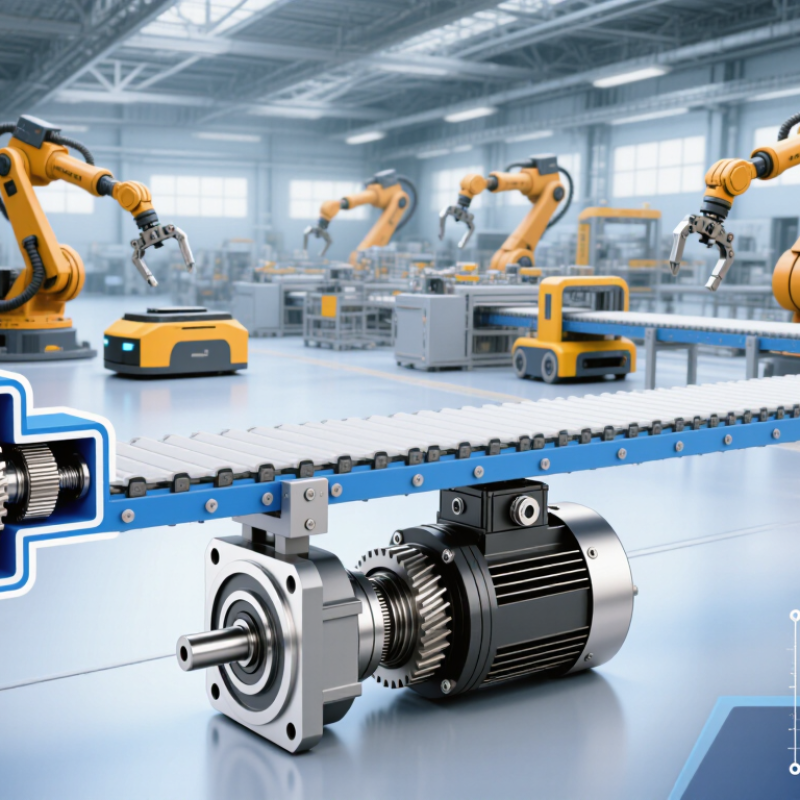
What Is a Low Profile Gear Motor?

Definition and Core Function of a Low Profile Gear Motor

A low profile gear motor is a motor and gearbox built into a shallow, compact assembly. Its defining feature is reduced height, which helps it fit where vertical clearance is limited. The exact dimensions vary by design, so “low profile” is a relative description rather than a universal size standard.

Inside, the electric motor produces rotation, while the gear train changes its speed and torque. In many designs, gears reduce output speed and increase available torque. The output shaft then turns a wheel, roller, or other mechanism. A small conveyor, for example, may need steady roller movement without a tall motor housing protruding beneath the frame. Compact does not mean weak.

The gear ratio, motor rating, output-shaft arrangement, and mounting points determine whether a unit suits a particular machine. Check the required load and operating speed, not just the overall height. Heat and space for wiring also matter. A very shallow housing can make installation neat, but may leave less room for cooling or service access. The term itself can be a little vague; comparing dimension drawings and performance data is more reliable than relying on the label alone.

Key Components and How the Motor Transmits Motion

A low profile gear motor combines an electric motor and a compact gearbox, keeping the assembly’s height low where space is limited. Inside, the motor’s rotor turns a pinion or input gear. Meshing gears then reduce speed and raise output torque, while bearings support the shafts and a housing holds the gears in alignment. An output shaft transfers the turning force to a wheel, roller, or mechanism. Simple, but not lossless.

The U.S. Department of Energy’s 2021 U.S. Industrial and Commercial Motor System Market Assessment Report estimates that motor-driven systems use about 68% of U.S. manufacturing electricity. That figure describes motor systems broadly, not low profile gear motors alone; it underscores why selecting the right motor and transmission matters. In practice, check the specified output speed, torque, duty cycle, and mounting orientation—not just the motor’s wattage. Gear friction and bearing losses reduce usable output, and a compact housing can make heat harder to shed. A detail that is easy to miss: two units with similar ratings may behave differently under repeated starts or sudden loads. The data sheet helps, but the actual load still deserves a careful check.

What Is a Low Profile Gear Motor? - Key Components and How the Motor Transmits Motion

Component or Feature What It Does How It Transmits Motion Practical Design Consideration
Low-profile form factor Describes a motor-and-gearbox assembly designed to fit within a restricted height or shallow space. It does not define a single transmission method; the internal gearing may use spur, planetary, or another gear arrangement. “Low profile” is a descriptive term, not a universal dimensional standard. Check the assembly’s height, width, mounting pattern, and shaft position.
Electric motor Converts electrical energy into rotating mechanical motion. The motor’s rotor turns its output shaft, which drives the first gear stage or gearbox input. Motor type, voltage, speed, current, and duty rating should match the power supply and application.
Gear stages Reduce rotational speed and increase available output torque, subject to losses and component limits. Teeth on a driving gear engage a mating gear. Multiple stages combine to produce the overall gear ratio. A higher reduction ratio generally lowers output speed and raises torque, but does not increase power; efficiency and load ratings matter.
Gearbox housing Supports and encloses the gears, shafts, and bearings while helping maintain their alignment. The housing keeps gear centers in position so the gear teeth can mesh and transfer rotation reliably. Mounting stiffness, available space, heat dissipation, and protection from dust or moisture can affect performance and service life.
Output shaft Delivers the gearbox’s reduced-speed rotation to the driven equipment. The final gear stage turns the output shaft, which transfers torque through a coupling, wheel, pulley, or other load interface. Shaft diameter, shape, extension, allowable radial and axial loads, and coupling alignment should suit the application.
Bearings and lubrication Bearings support rotating shafts; lubricant reduces friction and wear between moving surfaces. They support smooth gear rotation and help maintain alignment as torque passes through the gearbox. Load, speed, operating temperature, orientation, and maintenance requirements influence bearing and lubrication choices.
Complete motion path Summarizes how electrical input becomes useful mechanical output. Electrical power → motor rotor and shaft → gearbox input → meshing gear stages → output shaft → driven load. Select the motor and gearbox together using required output speed, torque, duty cycle, space, and environmental conditions.

Common Gear Arrangements and Drive Configurations

What Is a Low Profile Gear Motor?
Common Gear Arrangements and Drive Configurations

A low-profile gear motor fits where mounting height is limited, such as beneath a conveyor or inside a compact machine frame. Its gear arrangement affects both the motor’s footprint and the direction of the output shaft. Inline helical units keep the shafts aligned but may need more length. Parallel-shaft units can reduce overall height, while right-angle bevel or worm arrangements turn the output through 90 degrees. Worm gearing can be compact, though efficiency and heat need careful checking under continuous loads.

The drive configuration matters just as much. A motor may attach directly to the gearbox, or connect through a coupling and adapter. A variable-frequency drive can adjust speed, but low-speed operation may reduce the cooling available from a motor’s fan. The U.S. Department of Energy’s 2014 motor-systems sourcebook estimates that motor systems account for about 69% of U.S. manufacturing electricity use. That figure is a reminder to match the motor and gearbox to the actual load, not just the available space. Check torque, duty cycle, mounting orientation, and expected starts per hour. A neat drawing can still mislead. Real machines vibrate, and cable clearance is easy to overlook.

Performance Factors, Benefits, and Design Limitations

A low profile gear motor combines a motor and reduction gearbox in a shallow package, helping equipment fit beneath conveyors, beside rollers, or inside compact machines. Its performance depends on more than height. Gear ratio sets output speed and torque; for a given motor, reducing speed generally increases available output torque, minus gearbox losses. Gear type, lubrication, bearing support, and duty cycle also matter. A unit that runs quietly for a short positioning move may overheat during continuous operation. Check the manufacturer’s torque, speed, and thermal ratings under the actual load.

Space is gained. But not for free. A flattened housing can restrict heat flow and limit room for larger gears or bearings. That may reduce continuous torque or service life, depending on the design. The International Energy Agency’s 2011 report, Energy-Efficiency Policy Opportunities for Electric Motor-Driven Systems, estimated that motor-driven systems used about 46% of global electricity. That figure is not a low-profile motor efficiency rating; it underlines why matching the motor and load matters. In practice, test startup current, noise, temperature, and backlash in the intended mounting position. A compact prototype may look right on the bench, then run hot inside a tight enclosure. I would not assume a smaller outline means a better system.

Typical Applications and Selection Considerations

What Is a Low Profile Gear Motor?
Typical Applications and Selection Considerations

A low-profile gear motor combines an electric motor and reduction gearbox in a shallow package. “Low profile” has no single universal size definition; overall height and shaft layout vary by design. Right-angle or pancake configurations can fit beneath conveyor decks, inside packaging machines, or behind narrow access panels. The aim is useful output torque without consuming scarce installation space. Space is tight.

Typical applications include compact conveyors, packaging equipment, vending systems, and mobile platforms. The International Energy Agency’s 2011 report, Energy-Efficiency Policy Opportunities for Electric Motor-Driven Systems, estimated that motor-driven systems account for about 46% of global electricity use. That figure is not specific to compact gear motors, but it highlights why drive selection matters. Compare required output speed and continuous torque, not just motor power. Check startup loads, duty cycle, heat dissipation, mounting orientation, noise, and protection against dust or moisture. A motor that fits neatly may still overheat in a sealed enclosure. That trade-off is easy to underestimate.

Tips: Measure the full envelope, including connectors and shaft clearance. Leave room for airflow. If loads vary, ask for both continuous and peak torque ratings. A quick fit check can save a frustrating redesign.

Low-Profile Gear Motor: Gear Ratio and Output Speed

Illustrative output speeds calculated from a 1,500 rpm motor speed. A gearmotor’s output speed is approximately motor speed divided by gear ratio; actual values depend on the motor and gearbox.

Selection note: Low-profile gear motors can suit space-constrained equipment such as compact conveyors, access mechanisms, and small automation systems. Choose a gear ratio based on required output speed, then verify torque, duty cycle, mounting dimensions, and operating conditions against the application.

FAQS

What is a low profile gear motor?

It combines an electric motor and gearbox in a shallow assembly. The reduced height helps it fit beneath conveyors or inside compact machines.

How does it transfer motion?

The motor turns gears inside the gearbox. The gears adjust speed and torque, then an output shaft turns a roller, wheel, or mechanism. Some power is lost to friction.

Does a smaller motor always provide less power?

No. Compact does not mean weak. Check the unit’s output torque, speed, and duty rating against the actual load.

What should I check before choosing one?

Review the dimension drawing, gear ratio, shaft arrangement, mounting points, and operating ratings. Also leave room for wiring and service access.

Why can a compact housing run hot?

A shallow housing may have less room to shed heat. Continuous operation or repeated starts can raise temperatures. Check thermal ratings in the intended enclosure.

Can two motors with similar ratings perform differently?

Yes. Gear design, bearing support, and repeated starts can affect real-world behavior. A data sheet helps, but the load still needs checking.

What tests are useful during installation?

Run the motor in its intended position. Check startup current, noise, temperature, and backlash under the expected load.

Is a low profile design always the better choice?

Not always. It can save vertical space, but may limit cooling or service access. I’d compare the full setup, not just the outline.

Conclusion

A Low Profile Gear Motor is a compact motor-and-gearbox assembly designed to deliver controlled rotation where vertical space is limited. The motor generates motion, while the gearbox reduces speed and increases usable torque. Its main elements typically include an electric motor, a gear train, shafts, bearings, and a housing. Together, these components transfer power from the motor to the output shaft, with the gear arrangement determining how speed, torque, and direction are adjusted.

Low-profile designs may use spur, planetary, or other gear arrangements, depending on the required size and performance. Their small footprint and ability to provide useful torque make them suitable for compact machinery, conveyors, actuators, and automated equipment. Selection involves considering output speed and torque, available space, efficiency, noise, duty cycle, mounting, and operating conditions. Although these motors save space, their compact dimensions can limit heat dissipation, load capacity, or service access, so the best choice balances performance requirements with the constraints of the application.

Mason

Mason

Mason is a seasoned marketing professional with a deep expertise in the company's offerings and a passion for driving brand awareness. With a strong background in digital marketing strategies, he has an innate ability to connect with diverse audiences and effectively communicate product benefits.......