10 Best Industrial Gear Motor Suppliers for Global Buyers

Time:2026-09-17 Author:Sophia
0%

Choosing an Industrial Gear Motor supplier involves more than comparing online prices. Global buyers must examine torque capacity, gear ratios, motor efficiency, mounting dimensions, and operating temperature. A motor that performs well in a clean factory may struggle in a dusty warehouse or humid port facility.

This guide introduces ten respected Industrial Gear Motor suppliers serving international markets. The selection considers product range, engineering capability, manufacturing experience, quality systems, customization support, and after-sales service. It also considers practical details, including delivery schedules, spare-part access, documentation, and technical communication across time zones.

Fit matters.

Real purchasing decisions often depend on small details. A missing flange measurement can delay installation. An unclear duty-cycle rating may increase maintenance costs. In my experience, supplier claims should be checked against datasheets, test reports, warranty terms, and customer references. Certifications can support confidence, but they do not replace application testing.

No supplier is perfect. Some offer excellent customization but longer lead times. Others provide competitive pricing but limited local support. The best choice depends on load requirements, production conditions, budget, and future expansion plans. Buyers should confirm voltage, brake requirements, shaft design, protection rating, noise limits, and expected service life before placing an order.

The companies discussed here represent different strengths rather than identical solutions. Their rankings should be treated as a practical starting point, not a permanent verdict. Market conditions change, product lines evolve, and regional performance may differ. Careful verification remains essential before signing a purchase agreement.
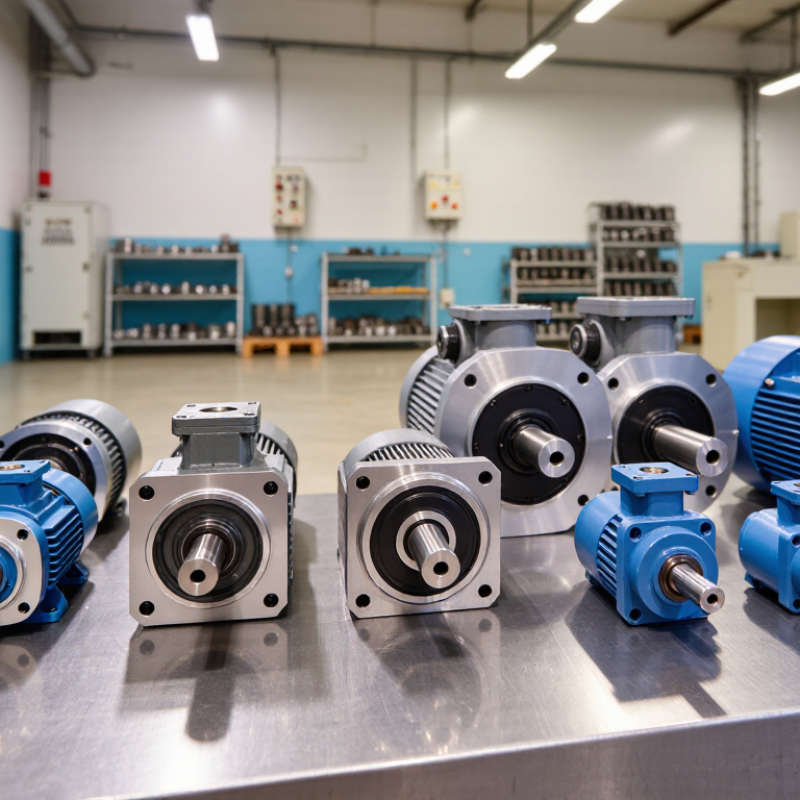
10 Best Industrial Gear Motor Suppliers for Global Buyers

Industrial Gear Motors: Types, Functions, and Key Applications

Industrial gear motors combine an electric motor with a reduction gearbox. They deliver controlled torque at lower speed. This makes them practical for conveyors, mixers, packaging lines, hoists, and automated storage systems.

Common types include helical, bevel, worm, planetary, and inline gear motors. Helical units suit continuous conveyor duty because they offer strong efficiency and smooth operation. Bevel models transfer power through a right-angle layout. Worm gear motors provide compact reduction, but their heat loss can be significant.

Planetary designs handle high torque in limited spaces. Selection should consider load, duty cycle, output speed, starting torque, mounting position, and ambient temperature. A supplier that only lists rated power is not providing enough engineering information.

Efficiency deserves careful attention. The International Energy Agency estimates that electric motor systems consume roughly half of global electricity. The U.S. Department of Energy reports that motor-driven systems use about 70% of industrial electricity in the United States. Small efficiency losses can become large operating costs.

In factory audits, misalignment, poor lubrication, and oversized motors often appear together. That finding is easy to overlook. Buyers should request thermal ratings, service factors, noise data, efficiency testing, spare-parts availability, and documented conformity with applicable standards. Market reports also forecast steady gear-motor demand, although their figures vary by definition and region. That uncertainty deserves scrutiny before comparing supplier claims.

How to Evaluate Global Gear Motor Suppliers

Choosing among the 10 best industrial gear motor suppliers requires more than comparing prices. Start with the application. Record required torque, speed, duty cycle, mounting position, ambient temperature, and load variation. A supplier should explain its calculations clearly, not offer a generic catalog model.

Ask for test reports, material specifications, efficiency data, and protection ratings. Verify whether the gear motor suits dust, moisture, vibration, and frequent starts. Request samples when possible. A short factory trial can reveal noise, heat, backlash, or mounting problems before production begins. Ask for evidence.

Supplier reliability also depends on quality systems and technical support. Review inspection procedures, traceability records, warranty terms, spare-part availability, and response times. Certifications matter, but their scope must match the product and destination market. Check export documents, electrical requirements, and local compliance before signing. Total cost includes freight, duties, installation, maintenance, and downtime.

Speak with reference customers using similar machinery. Their feedback may expose weaknesses that brochures hide. During one evaluation, a low-priced unit appeared attractive until its extended lead time disrupted the project. That mistake was avoidable. Still, no supplier is perfect. Ask how failures are handled, who pays for corrective action, and whether engineering changes are communicated formally. A dependable partner accepts difficult questions and provides measurable answers.

Ten Leading Industrial Gear Motor Suppliers Compared

Ten Leading Industrial Gear Motor Suppliers Compared

The ten leading industrial gear motor suppliers differ in torque, efficiency, customization, and service depth. A serious comparison starts with operating conditions, not catalog price. Helical units suit conveyors and mixers. Worm gear motors often reduce cost, but they may lose more energy during continuous operation. Planetary designs offer high torque in compact spaces. That advantage matters in packaging lines with limited mounting room.

During supplier reviews, buyers should request load charts, thermal ratings, shaft drawings, and test records. Look for documented quality systems, traceable materials, and clear warranty terms. Protection ratings also deserve attention. An IP65 enclosure may handle dust and water spray, while harsh washdown areas may require stronger protection. Ask how each supplier validates noise, vibration, backlash, and brake performance. A polished website proves little.

Lead time separates dependable suppliers from convenient sellers. Some offer standard motors within weeks, while custom flanges or hollow shafts require longer planning. After-sales support should include spare parts, troubleshooting, and installation guidance. One low quotation can hide expensive downtime. A factory trial once exposed overheating that the brochure did not mention. The supplier corrected the design, but the delay affected production. I would compare efficiency at actual load, not the best laboratory value. Service distance, language support, and local compliance documents can influence the final decision more than a small price difference.

Essential Specifications for Selecting the Right Gear Motor

When comparing the 10 best industrial gear motor suppliers for global buyers, specifications matter more than catalog size. The U.S. Department of Energy’s Motor Systems Market Assessment reports that motor-driven equipment uses about 69% of industrial electricity in the United States. Efficiency is therefore a purchasing issue, not a minor technical detail. Check the motor’s IE efficiency class under IEC 60034-30-1, then calculate energy use at the actual operating load.

Torque, speed, and service factor should match the machine’s duty cycle. A conveyor starting under load needs different torque behavior from a lightly loaded packaging line. Confirm rated output torque, reduction ratio, permissible radial load, and braking requirements. The gearbox’s thermal rating also deserves attention. A unit may deliver the required torque briefly, yet overheat during continuous operation. That mistake is common.

Protection and environment shape long-term reliability. IEC 60529 ingress ratings help buyers compare dust and water resistance, while operating temperature, humidity, washdown exposure, and mounting position require written confirmation. The International Energy Agency has repeatedly identified motor efficiency as a major industrial energy-saving opportunity, but laboratory ratings can mislead when installation is poor. Ask for test conditions, noise data, vibration limits, lubrication intervals, and documented quality procedures. Supplier audits and sample testing provide stronger evidence than polished brochures. I would also leave a margin for uncertain starting loads, though excessive oversizing can reduce efficiency and increase cost.

10 Best Industrial Gear Motor Suppliers for Global Buyers - Essential Specifications for Selecting the Right Gear Motor
Profile Primary Gear Type Typical Power Range Typical Output Torque Reduction Ratio Input Speed Typical Efficiency Ingress Protection Duty Rating Recommended Applications Key Buyer Documents
Profile 01 Helical gear motor 0.12–7.5 kW 10–1,500 N·m 3:1–100:1 1,500 rpm nominal Up to 96% IP54–IP66 S1 continuous Conveyors, packaging lines, material handling Datasheet, efficiency curve, dimensional drawing, test report
Profile 02 Helical-bevel gear motor 0.12–90 kW 50–18,000 N·m 4:1–300:1 1,500 rpm nominal Up to 95% IP55–IP66 S1 continuous Heavy conveyors, pallet systems, process equipment Load chart, mounting details, lubrication data, conformity declaration
Profile 03 Worm gear motor 0.09–15 kW 20–4,000 N·m 5:1–100:1 1,500 rpm nominal 50–92% IP54–IP66 S1 or intermittent Gates, mixers, small conveyors, positioning systems Self-locking conditions, thermal rating, backlash data, service factor table
Profile 04 Planetary gear motor 0.2–250 kW 100–100,000 N·m 3:1–10,000:1 Up to 3,000 rpm Up to 97% IP54–IP67 S1 continuous Robotics, cranes, mobile machinery, high-torque drives Torque-speed curve, torsional stiffness, bearing-life calculation, inspection record
Profile 05 Parallel-shaft gear motor 0.18–200 kW 80–30,000 N·m 3:1–200:1 750–1,800 rpm Up to 96% IP55–IP66 S1 continuous Belt conveyors, feeders, elevators, warehouse systems Output-shaft load limits, service factor, mounting orientation, noise data
Profile 06 Right-angle gear motor 0.12–45 kW 40–8,000 N·m 5:1–500:1 1,500 rpm nominal Up to 94% IP55–IP66 S1 continuous Compact machinery, turntables, filling and labeling equipment Installation manual, shaft-load chart, thermal limits, wiring diagram
Profile 07 Stainless-steel gear motor 0.09–30 kW 15–5,500 N·m 3:1–300:1 750–1,800 rpm Up to 94% IP66–IP69K S1 continuous Food processing, beverage filling, washdown areas Material certificate, washdown rating, hygienic design details, seal specification
Profile 08 Explosion-protected gear motor 0.12–75 kW 30–14,000 N·m 4:1–300:1 750–1,800 rpm Up to 95% IP55–IP66 S1 continuous Chemical plants, paint facilities, dust-risk areas Hazardous-area certificate, temperature class, cable-entry data, routine test record
Profile 09 Servo-compatible gear motor 0.2–30 kW 20–3,000 N·m 3:1–100:1 Up to 6,000 rpm Up to 97% IP54–IP65 Intermittent or S1 Pick-and-place systems, indexing, automated assembly Backlash specification, inertia data, allowable acceleration, encoder compatibility
Profile 10 High-torque industrial gear motor 15–1,000 kW 5,000–500,000 N·m 5:1–400:1 300–1,500 rpm Up to 98% IP55–IP66 S1 continuous Mining, steel processing, crushers, bulk-material handling Gear calculations, foundation loads, vibration limits, commissioning procedure
Note: Values are typical engineering ranges used for preliminary supplier comparison. Final selection should be based on the required load profile, duty cycle, ambient conditions, mounting position, voltage, service factor, applicable standards, and supplier-specific test documentation.

International Purchasing, Compliance, and After-Sales Support

10 Best Industrial Gear Motor Suppliers for Global Buyers

International purchasing demands more than a competitive quotation. A reliable supplier should confirm torque, speed ratio, duty cycle, mounting position, and operating environment in writing. Request dimensional drawings, material details, test records, and a traceable serial number for each unit. Sample testing under realistic loads can reveal overheating, vibration, or unexpected noise before a full order leaves the factory. Small details matter.

Compliance documents must match the destination market and the actual product configuration. Ask for applicable conformity declarations, electrical safety information, efficiency data, and packaging specifications. Confirm whether certificates cover the complete gear motor, not only individual components. Import classification, labeling, voltage, and installation instructions also deserve careful review. A polished certificate proves little when its model number is wrong.

After-sales support often separates a dependable supplier from a risky purchase. Clarify warranty duration, claim procedures, response times, spare-parts availability, and technical assistance across time zones. Useful suppliers provide wiring guidance, troubleshooting videos, replacement recommendations, and written maintenance schedules. Keep communication records. They protect both sides. No supplier is flawless, and buyers should not ignore that reality. Some teams promise rapid support but lack local service capacity. A practical trial order, factory audit, and agreed escalation process can expose this weakness early. Good purchasing is not merely finding a motor; it is building a support path that remains usable after delivery.

FAQS

What information should I collect before comparing gear motor suppliers?

Record required torque, speed, duty cycle, mounting position, temperature, and load variation.

How can I verify that a gear motor matches my application?

Request load charts, thermal ratings, shaft drawings, test reports, and calculation details.

Which gear motor design suits different industrial machines?

Helical units often suit conveyors and mixers.

What efficiency details should buyers examine?

Check the motor’s efficiency class and test conditions.

How important are enclosure and environmental ratings?

Confirm resistance to dust, moisture, vibration, humidity, and washdown exposure.

What tests should be completed before production begins?

Request samples or arrange a short factory trial when possible.

How should I evaluate supplier reliability and support?

Review inspection procedures, material traceability, warranty terms, spare parts, and response times.

What hidden costs should be included in the final comparison?

Include freight, duties, installation, maintenance, spare parts, and possible downtime.

Should I contact existing customers before selecting a supplier?

Yes, speak with customers using similar machinery and operating conditions.

Conclusion

Industrial Gear Motor systems are essential for converting motor speed and torque into reliable mechanical power across manufacturing, material handling, packaging, mining, and automated production. This guide explains the main gear motor types, operating functions, and application requirements, while showing buyers how to compare global suppliers through product quality, engineering capability, production consistency, certifications, delivery performance, and customer support. It also presents a practical framework for evaluating leading suppliers without focusing on brand names.

The article further outlines the key specifications needed for proper selection, including output torque, speed ratio, motor power, duty cycle, mounting configuration, efficiency, noise level, protection rating, and environmental conditions. For international purchasing, readers will learn how to review technical documentation, confirm compliance with applicable standards, manage logistics, clarify warranties, and assess after-sales service. Together, these considerations help global buyers choose an Industrial Gear Motor that delivers dependable performance, efficient operation, long service life, and strong value for specific industrial applications.

Sophia

Sophia

Sophia is a dedicated marketing professional with an exceptional depth of knowledge about her company's products and services. With a keen understanding of market trends and customer needs, she crafts insightful blog posts that not only inform but also engage readers, enriching the company’s online......