China Top Geared Brushless Motor Manufacturers?
China has become a major sourcing base for compact motion systems, industrial automation, robotics, and electric equipment. Its leading manufacturers produce Geared Brushless Motor solutions with different torque ranges, gear ratios, winding designs, and control options. However, factory size alone cannot prove engineering quality.
Dr. H. A. Toliyat, a respected motor-drive researcher, offers a useful principle: “Motor selection must begin with the application, not the catalog.” This idea matters when comparing Chinese suppliers. A motor may look impressive on paper, yet fail under continuous load, heat, vibration, or frequent starts. Buyers should examine torque curves, gearbox materials, thermal performance, encoder accuracy, noise levels, and tested service life.
Real evaluation requires more than website claims. Request technical drawings, sample units, load-test reports, insulation data, and evidence of quality-system control. Check whether the manufacturer performs rotor balancing, gear inspection, and final performance testing. Ask how the company handles customization, replacement parts, production changes, and after-sales communication. Small details often reveal practical experience.
No ranking is perfect.
Some suppliers specialize in high-volume standard motors. Others excel at low-noise gearboxes, waterproof designs, or customized drives. A fair comparison should consider application fit, engineering support, consistency, delivery reliability, and total ownership cost. Certification marks can help, but they do not replace independent verification. This overview will examine China’s notable Geared Brushless Motor manufacturers through those practical criteria, while recognizing that performance may vary between models, batches, and operating conditions.
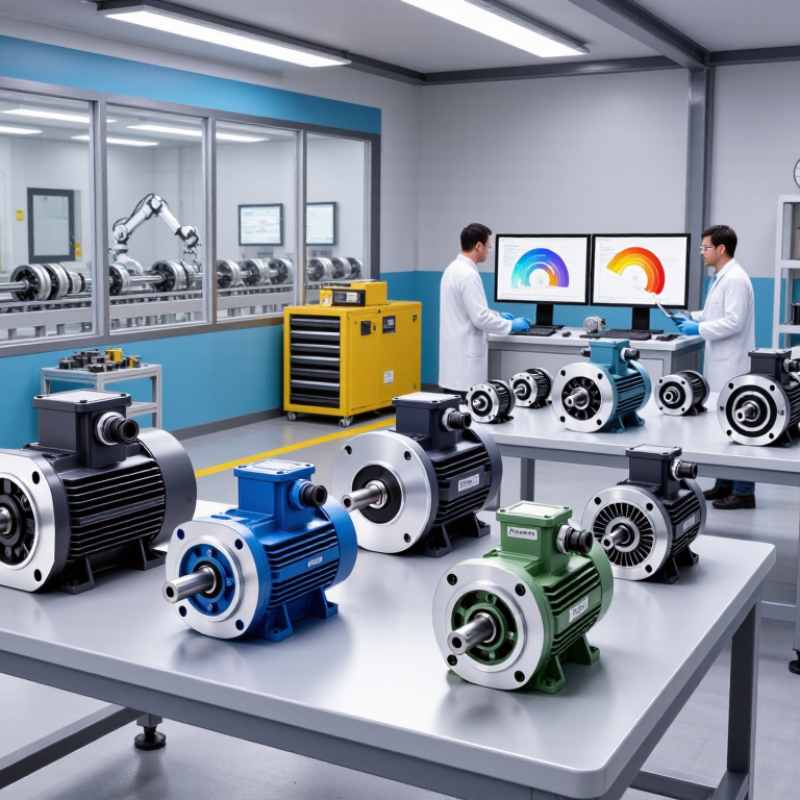
Geared brushless motors combine a brushless DC motor with a reduction gearbox. The motor’s permanent-magnet rotor spins rapidly, while electronic controllers switch stator windings without mechanical brushes. The gearbox then lowers speed and increases torque. A 20:1 ratio, for example, can deliver roughly twenty times more torque before efficiency losses.
This design suits conveyor rollers, robotic joints, medical pumps, and automated doors. It offers quiet operation, precise control, and less brush wear.
The International Energy Agency reports that electric motor systems use about half of global electricity. Even small efficiency improvements therefore matter at scale.
A 2024 MarketsandMarkets report also estimates the brushless DC motor market at more than 20 billion dollars, with continued growth across industrial automation and mobility.
In practical selection, engineers should check rated torque, peak torque, duty cycle, gearbox backlash, thermal limits, and controller compatibility.
A motor may look efficient on paper. It can still overheat inside a sealed housing.
Planetary gears provide compact torque density, while spur gears often reduce cost.
Helical gears can run more smoothly, but they may create additional axial loads.
Sensorless control reduces wiring, yet it may struggle during very slow starts. This is where specifications alone become insufficient; testing under real load remains necessary.
Misjudging startup torque is a common, avoidable mistake.
Choosing Chinese geared brushless motor manufacturers can shorten the path from a drawing to a tested sample. In factory evaluations, I look beyond catalog torque. I check gear backlash, winding quality, thermal rise, and encoder alignment. These details decide whether a motor survives a conveyor, valve, or compact robot. Chinese manufacturers often combine motor winding, gearbox machining, electronics, and assembly nearby. That proximity can make engineering changes faster.
Their technical advantage is practical rather than flashy. Engineers can adjust tooth profiles, reduction ratios, magnets, bearings, and firmware together. A 24-volt motor may need quiet starts, stable speed, and controlled holding torque. Local tooling and component networks can support these requirements at modest volumes. Prototype feedback also moves quickly when drawings, samples, and test data stay in one communication loop. Still, low quotes deserve careful questions. Ask for torque-speed curves, temperature limits, life-test methods, and traceable inspection records. Cheap is not a specification.
Reliable suppliers welcome independent tests and clear acceptance criteria. I prefer sealed samples, serial records, and repeat tests after thermal cycling. Export experience helps with packaging, documentation, and consistent production batches. Yet communication can fail through vague translations or optimistic delivery dates. I have seen a promising sample change after mass production. That risk is real. Define tolerances, noise limits, connector details, and warranty procedures before payment. Factory visits or live video audits add useful evidence, though they cannot replace long-term data. The best choice is not always the lowest price. It is the manufacturer that can explain every measured number.
China Top Geared Brushless Motor Manufacturers?
Evaluating China’s leading geared brushless motor manufacturers requires more than comparing unit prices. The International Energy Agency reports that electric motor systems consume about 53% of global electricity. Efficiency, therefore, affects operating cost, not just product specifications. Check measured torque, no-load speed, stall current, gearbox backlash, noise, and temperature rise. Ask for test records from the same production batch. A polished brochure is not enough.
Experienced buyers should verify compliance with IEC 60034 requirements and request evidence of ISO 9001-based quality control. Examine winding materials, bearing sources, gear hardness, sealing design, and end-of-line testing. For dusty equipment, confirm the tested IP rating, not a claimed rating. Request lifetime data under realistic loads, such as repeated starts, reverse rotation, and eight-hour duty cycles. MarketsandMarkets’ recent industrial motor analysis highlights automation and energy efficiency as major demand drivers, but market forecasts cannot replace factory evidence. No scorecard is perfect.
Tips: Compare three samples, not one. Use an independent laboratory for efficiency, noise, and thermal testing. Confirm whether quoted torque is continuous or temporary. Check traceability from raw magnets to final assembly. Visit the factory if possible; observe calibration, aging tests, and rejected units. I would also review warranty claims honestly, because supplier interviews often sound better than field results. Leave room for doubt.
This chart presents a practical procurement weighting model for evaluating geared brushless motor manufacturers. Product quality and testing capability receive the highest priority, followed by customization, supply consistency, and technical support. The percentages represent evaluation priorities rather than company-specific performance or market-share data.
China Top Geared Brushless Motor Manufacturers?
Geared brushless motors support precise motion in many global markets. Their compact size, high efficiency, and controllable torque suit mobile robots, automated conveyors, medical equipment, and electric mobility. The International Federation of Robotics reported 541,302 industrial robots were installed worldwide in 2023. Many robotic joints and auxiliary systems require geared motor control for smooth starts and accurate positioning. The detail matters. A small backlash error can reduce assembly quality.
Electric mobility is another major application. The International Energy Agency reported global electric car sales exceeded 17 million in 2024. Geared brushless motors also operate in e-bikes, cooling fans, pumps, seat systems, and charging mechanisms. MarketsandMarkets estimates that the wider brushless DC motor market could grow from about USD 21 billion in 2023 to over USD 33 billion by 2028. These figures show strong demand, although geared motor data is often grouped with broader motor categories. That limitation deserves attention.
Tips: Match the gearbox ratio with real load cycles, not peak torque alone. Check noise, thermal rise, encoder accuracy, and service life under dust or humidity. Ask manufacturers for test curves and batch inspection records. A low-cost motor may perform well initially, but weak gears can create costly downtime. Field testing remains essential.
| Global Application | Typical Product Configuration | Common Voltage Range | Typical Output Speed | Typical Output Torque | Preferred Gearbox Type | Typical Protection Level | Control and Feedback | Key Selection Criteria for Buyers | Representative Global Markets |
|---|---|---|---|---|---|---|---|---|---|
| Automated Guided Vehicles and Autonomous Mobile Robots | 24 V or 48 V brushless motor with planetary or spur reduction gearbox | 24–48 VDC | 30–300 rpm | 5–80 N·m | Planetary gearbox for high torque density; spur gearbox for cost-sensitive designs | IP54–IP65 | Hall sensors, incremental encoder, CAN, RS-485, or EtherCAT-compatible drive | Low backlash, repeated acceleration and braking, thermal performance, wheel-load capability, and service life | Warehousing, e-commerce fulfillment, automotive plants, hospitals, and distribution centers |
| Conveyor and Material-Handling Equipment | Integrated geared BLDC drive or motorized roller assembly | 24–48 VDC; 110–230 VAC through an integrated drive in some systems | 50–500 rpm | 1–40 N·m | Spur or helical gearbox | IP54–IP66 | Hall sensors, sensorless control, variable-speed controller, or PLC interface | Continuous-duty rating, starting torque, noise level, energy consumption, compact dimensions, and easy replacement | Parcel sorting, airport logistics, food processing, packaging, and general manufacturing |
| Electric Actuators and Adjustable Furniture | Low-noise geared BLDC motor with lead-screw, worm, or linear-actuator mechanism | 12–36 VDC | 5–150 rpm | 2–35 N·m | Worm or helical gearbox where self-locking or high reduction is required | IP20–IP54 | Limit switches, Hall sensors, encoder feedback, remote-control receiver, or memory controller | Low acoustic noise, holding force, duty cycle, travel repeatability, overload protection, and compact installation | Standing desks, medical beds, recliners, lifting columns, and rehabilitation equipment |
| Medical and Laboratory Equipment | Precision geared BLDC motor with encoder and low-vibration mechanical transmission | 12–48 VDC | 1–200 rpm | 0.2–20 N·m | Planetary or low-backlash spur gearbox | IP40–IP65 | Encoder feedback, closed-loop servo control, RS-485, CAN, or dedicated medical controller | Position accuracy, repeatability, low vibration, low electromagnetic interference, cleanability, and traceability | Infusion systems, laboratory automation, imaging accessories, dental equipment, and patient-care devices |
| HVAC Dampers, Valves, and Building Automation | Compact geared BLDC actuator with integrated controller and position feedback | 12–24 VDC; 24 VAC in some building-control systems | 1–60 rpm | 1–25 N·m | Worm or spur gearbox | IP42–IP65 | Proportional control, 0–10 V, PWM, BACnet gateway, Modbus, or analog feedback | Holding torque, stall protection, operating noise, fail-safe behavior, ambient temperature range, and long idle-life performance | Commercial buildings, data centers, cleanrooms, hotels, and industrial ventilation systems |
| Solar Tracking and Renewable-Energy Equipment | High-reduction geared BLDC motor with brake or self-locking transmission | 24–48 VDC | 0.5–30 rpm | 20–250 N·m | Worm or planetary gearbox | IP65–IP67 | Encoder, limit switches, position controller, RS-485, or distributed tracker control | Outdoor sealing, corrosion resistance, wind-load holding, low standby power, temperature range, and maintenance interval | Utility-scale photovoltaic plants, rooftop solar systems, and remote renewable-energy installations |
| Commercial and Service Robots | Compact high-efficiency geared BLDC motor with encoder and integrated drive | 12–48 VDC | 20–400 rpm | 0.5–30 N·m | Planetary or harmonic-compatible reduction stage | IP20–IP65 | Absolute or incremental encoder, CAN, RS-485, EtherCAT, or proprietary motion bus | Weight, backlash, peak torque, regenerative braking, thermal limits, electromagnetic compatibility, and lifecycle testing | Cleaning robots, delivery robots, security robots, hospitality equipment, and agricultural machines |
| Food, Beverage, and Packaging Machinery | Washdown-capable geared BLDC motor or stainless-steel motorized assembly | 24–48 VDC; 110–230 VAC drive systems are also used | 20–600 rpm | 1–60 N·m | Helical, spur, or planetary gearbox | IP65–IP69K | PLC-controlled speed command, encoder feedback, sensorless control, or industrial fieldbus | Washdown resistance, food-safe materials, hygienic design, continuous operation, speed stability, and easy sanitation | Filling, labeling, capping, inspection, dosing, bottling, and secondary packaging lines |
| Retail Displays, Vending, and Access-Control Systems | Small geared BLDC motor with compact controller and intermittent-duty operation | 5–24 VDC | 5–300 rpm | 0.05–5 N·m | Spur or planetary gearbox | IP20–IP54 | Hall sensors, simple direction control, limit switches, or serial command | Low cost, compact size, low standby consumption, quiet operation, jam detection, and high availability | Vending machines, smart lockers, retail displays, ticketing equipment, and automatic doors |
| Industrial Pumps, Fans, and Small Compressors | High-efficiency geared BLDC motor with electronic commutation and thermal monitoring | 24–72 VDC; higher-voltage versions use an integrated inverter | 100–3,000 rpm | 0.2–25 N·m | Helical or planetary gearbox where speed matching is required | IP54–IP67 | Sensorless control, Hall sensors, speed feedback, PWM, analog input, or industrial communication | Efficiency, continuous-duty capability, flow or pressure stability, acoustic noise, thermal protection, and EMC performance | Water treatment, industrial cooling, laboratory systems, air handling, and portable power equipment |
| Electric Mobility and Light Electric Vehicles | High-torque geared BLDC traction motor with sealed gearbox and vehicle controller | 24–72 VDC | 100–3,000 rpm at the motor; lower speed at the wheel | 10–150 N·m at the gearbox output | Planetary or helical gearbox | IP65–IP67 | Hall sensors, resolver or encoder, CAN, field-oriented control, and regenerative braking | Peak torque, efficiency map, thermal capacity, shock resistance, water protection, braking compatibility, and homologation requirements | Mobility scooters, utility carts, small agricultural vehicles, warehouse vehicles, and electric bicycles |
Selecting a Chinese geared brushless motor manufacturer requires more than comparing unit prices. The International Energy Agency reports that electric motor systems consume about half of global electricity, making efficiency and reliability commercial priorities. Define torque, speed, duty cycle, gearbox ratio, noise limits, and operating temperature before requesting quotations. Vague specifications create expensive revisions.
Ask for measured test data, not catalog claims. Request torque-speed curves, efficiency at several loads, winding temperature, gearbox backlash, vibration, and expected service life. IEC 60034-based testing can improve comparability, although it does not replace application testing.
Check whether the factory controls magnets, bearings, gear machining, and final assembly internally. A clean production area, calibrated test equipment, and serial-level traceability are useful evidence.
Use a staged evaluation. Begin with samples, then run them under your real load profile for several hundred hours. Inspect temperature rise after repeated starts, stalls, and direction changes. The IEA 4E Electric Motor Systems Annex emphasizes that system-level performance matters more than motor nameplate efficiency. This is easy to overlook.
Audit quality records, incoming inspection, corrective-action reports, and spare-part availability. Confirm compliance documents for your target market, including applicable safety and electromagnetic compatibility requirements. A low quotation may hide tooling fees, custom firmware work, or weak after-sales support. I would also challenge my own assumptions: factory size does not guarantee engineering depth, and a perfect sample may not represent stable mass production.
It combines a brushless DC motor with a reduction gearbox. The motor spins quickly, while the gearbox lowers speed and increases torque. No mechanical brushes are used.
A 20:1 ratio can provide about twenty times more torque before efficiency losses. The trade-off is lower output speed and some mechanical loss.
They suit conveyor rollers, robotic joints, medical pumps, automated doors, and electric mobility systems. They also support cooling fans, seat mechanisms, and charging equipment.
Check rated torque, peak torque, speed, duty cycle, gearbox backlash, thermal limits, and controller compatibility. Encoder accuracy and expected service life also matter.
Planetary gears offer compact torque density. Spur gears often cost less. Helical gears can run more smoothly, but they may create axial loads.
Yes. Heat may build up even when catalog efficiency looks good. Test temperature rise during repeated starts, stalls, and direction changes.
No. It reduces wiring, but slow starts can be difficult to control accurately. An encoder may work better for precise positioning.
Request measured torque-speed curves, efficiency data, backlash results, vibration records, and temperature tests. Check calibrated equipment, traceability, quality records, and spare-part support.
Not really. Run samples for several hundred hours under real loads, dust, humidity, and repeated direction changes. A perfect sample proves little. Mass production can still vary.
A Geared Brushless Motor combines the efficiency and long service life of brushless motor technology with the torque multiplication of a gearbox. This design delivers stable speed control, strong starting torque, quiet operation, and improved energy efficiency, making it suitable for equipment that requires reliable and precise motion. Chinese manufacturers are often considered attractive partners because they can offer broad production capabilities, flexible customization, competitive pricing, and experience serving diverse international markets.
When evaluating China’s leading motor manufacturers, buyers should examine engineering expertise, material quality, manufacturing consistency, testing procedures, certifications, delivery capacity, and after-sales support. Geared brushless motors are widely used in automation systems, robotics, electric mobility, medical equipment, logistics machinery, household devices, and other applications. Selecting the right supplier requires clearly defining torque, speed, voltage, gearbox ratio, operating environment, service life, and customization requirements. A dependable manufacturer should provide technical communication, sample testing, transparent quality control, and long-term cooperation support.
