Choosing a 3-Phase AC Motor is rarely just a matter of comparing horsepower and price. Global buyers must examine efficiency, starting torque, enclosure design, service access, and regional standards. A motor running beside a dusty conveyor needs different protection from one installed in a clean packaging line. Voltage and frequency also matter, especially for equipment moving between 50 Hz and 60 Hz markets.
The International Energy Agency reports that electric motor systems consume a significant share of global electricity, with industrial motor-driven systems representing a major efficiency opportunity. The U.S. Department of Energy similarly identifies motor-driven equipment as one of the largest industrial electricity users. These findings make IE3, IE4, and emerging IE5 efficiency classes commercially important. However, efficiency labels alone do not guarantee lower operating costs. Load profile, inverter compatibility, maintenance quality, and operating hours can change the result.
This guide reviews ten widely relevant 3-Phase AC Motor options for international buyers. It considers IEC 60034 efficiency requirements, NEMA MG 1 practices, thermal protection, bearings, noise, and manufacturer support. Motors from Siemens, ABB, WEG, TMEIC, Nidec, TECO-Westinghouse, and other established suppliers may suit different applications. No ranking fits every factory. A low-cost motor can become expensive after repeated bearing failures or poor spare-parts access. Conversely, the most efficient model may be unnecessary for intermittent duty. That is an uncomfortable detail, but it deserves attention. The best selection balances verified specifications, local service capability, lifecycle cost, and the physical realities of the installation.
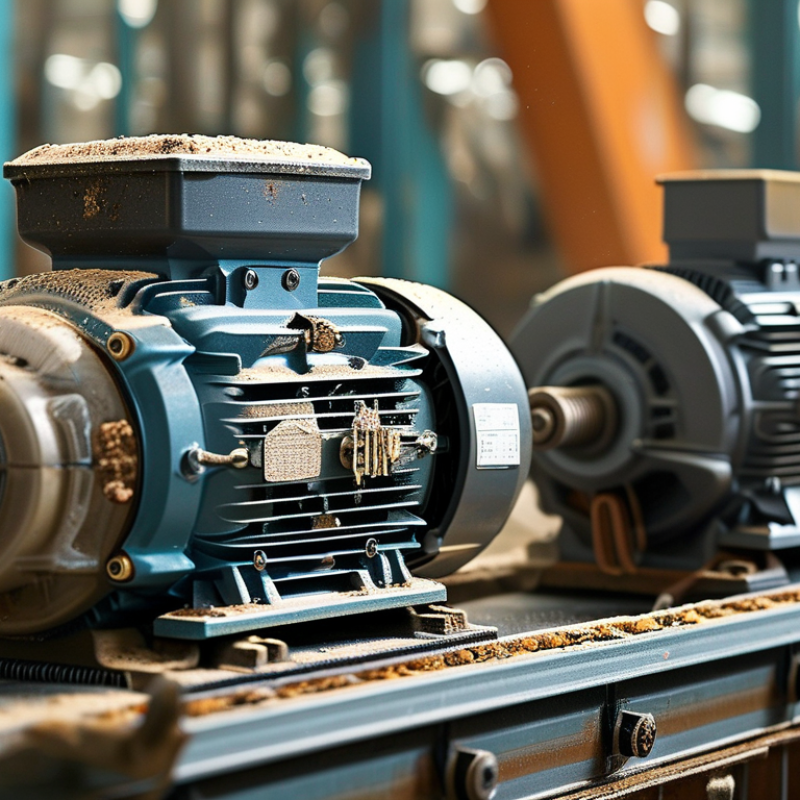
A three-phase AC motor converts electrical energy into mechanical rotation through three alternating currents. These currents reach peak voltage 120 electrical degrees apart. Together, they create a rotating magnetic field inside the stator.
The rotor follows this field, but usually moves slightly slower. This difference is called slip. For example, a four-pole motor supplied at 50 Hz has a synchronous speed of 1,500 revolutions per minute. Load, temperature, and voltage imbalance reduce its actual speed. The motor may look simple. Its losses are not.
The International Energy Agency reports that electric motor systems consume roughly half of global electricity. In industrial facilities, motor-driven systems can represent about 70% of electricity use, according to energy-efficiency studies. This explains why global buyers should examine more than rated horsepower. Check efficiency class, starting current, duty cycle, enclosure protection, insulation, and service conditions. A pump motor near saltwater needs stronger corrosion protection than one inside a dry workshop.
A variable-frequency drive changes motor speed by adjusting frequency and voltage. It can reduce energy use during partial-load operation, but poor settings may cause overheating or harmonic stress. The U.S. Department of Energy recommends evaluating the complete motor-and-drive system, not the motor alone. I would also verify terminal connections, phase balance, and bearing condition during commissioning. Nameplate data can mislead. Real operating measurements often reveal the better choice. (IEA, Energy Efficiency 2016; U.S. DOE, Improving Motor and Drive System Performance)
Choosing among the top 10 three-phase AC motor types requires matching the motor to the real load, not just its rated power. Standard squirrel-cage induction motors suit pumps, fans, compressors, and conveyors. High-efficiency induction models reduce energy losses during long operating hours. Cast-iron frames tolerate dusty workshops, while aluminum frames reduce weight. Small mistake, large cost.
Wound-rotor and slip-ring motors provide strong starting torque for crushers, hoists, and loaded conveyors. Synchronous motors maintain stable speed in precision drives and can improve power factor. Permanent-magnet synchronous motors support compact, efficient systems, especially with variable-frequency drives. Synchronous-reluctance motors offer low rotor losses for pumps and material-handling equipment. Brake motors help stopping cycles in lifts, machine tools, and packaging lines.
Application conditions often decide the final choice. Check starting current, duty cycle, shaft load, ambient temperature, enclosure rating, and available voltage. A dusty cement area may require a sealed enclosure and reinforced bearings. A wet processing line needs corrosion resistance and suitable ingress protection. For frequent speed changes, confirm that the insulation system supports inverter operation. Maintenance teams should also inspect alignment, vibration, lubrication, and terminal connections. In practice, catalog efficiency figures can mislead when the motor runs lightly loaded. The cheapest option may become expensive after months of poor operating conditions. Selection should include measured load data whenever possible, although field measurements are sometimes incomplete.
Which three-phase AC motor types suit different industrial applications?
Efficiency values show representative full-load performance for common industrial motor designs and can vary with rated power, speed, voltage, frequency, enclosure and duty cycle. Standard induction motors are widely used for pumps, fans and conveyors; synchronous reluctance and permanent-magnet motors are suited to high-efficiency variable-speed systems; wound-rotor motors are useful where high starting torque is required; and specialized brake or explosion-protected motors are selected for safety-critical applications.
Data basis: representative values aligned with typical IEC 60034-30-1 efficiency-class ranges for industrial motors. Actual efficiency should be verified from the motor nameplate and manufacturer test data.
Comparing the top 10 three-phase AC motors requires more than checking rated power. Start with voltage, frequency, speed, torque, and duty cycle. A 400 V, 50 Hz motor may not suit a 460 V, 60 Hz installation. Confirm the local supply before reviewing price.
Look at efficiency class, starting current, power factor, and service factor. These figures affect energy bills and inverter selection. Enclosure type matters in dusty factories, humid ports, and outdoor pump stations.
Check IP protection, insulation class, cooling method, and mounting dimensions. A motor with a lower purchase price may require expensive modifications. That detail is often missed.
Use a comparison sheet for all ten candidates. Record efficiency at 50%, 75%, and full load. Request routine test reports, vibration limits, balancing details, bearing specifications, and warranty terms. Ask about spare bearings and local technical support. Delivery time also matters when a production line is waiting. Field conditions can expose weak assumptions. A perfect ranking is impossible. Ambient heat, altitude, frequent starts, and poor alignment can change the result. I would compare total operating cost over five years, then inspect service evidence carefully. A polished datasheet is useful, but measured performance is more convincing.
Top 10 3 Phase AC Motors for Global Buyers?
Global buyers should evaluate standards before comparing motor prices. IEC 60034-1 defines key operating and performance requirements for rotating electrical machines. IEC 60034-30-1 helps classify efficiency levels, such as IE3 or IE4. Some markets may require higher efficiency classes for continuous-duty equipment.
Voltage, frequency, rated output, speed, torque, and starting current must match the driven load. A 400 V, 50 Hz motor may not suit a 460 V, 60 Hz installation. Check the nameplate carefully. Small mismatches can create heat, vibration, or unexpected downtime. Duty rating matters too. S1 continuous duty differs from intermittent operating cycles. Ask for temperature-rise data, insulation class, service factor, and overload capability.
Protection and installation details are equally important. IEC 60034-5 defines enclosure protection, while IP55 is common for industrial environments. Dust, washdown water, salt air, and hazardous locations require different protection choices. Cooling method, mounting arrangement, bearing design, and shaft dimensions should match the machine frame. NEMA MG 1 may apply in North American projects, while local conformity rules can differ. Verify testing documents, efficiency reports, material traceability, and warranty terms. A certificate alone proves little without a matching model number. In practice, buyers sometimes overlook harmonics from variable-frequency drives. That mistake can shorten bearing life. A properly selected motor still needs correct alignment, grounding, and commissioning records. Performance estimates are never perfect; site conditions deserve a second review.
| Rank | Motor Configuration | Typical Power Range | Common Voltage and Frequency | Typical Speed / Poles | Efficiency and Relevant Standards | Enclosure / Cooling | Duty and Insulation | Typical Applications | Key Buyer Evaluation Criteria |
|---|---|---|---|---|---|---|---|---|---|
| 1 | Standard Low-Voltage Squirrel-Cage Induction Motor | 0.75–315 kW | 230/400 V or 400/690 V at 50 Hz; 460 V at 60 Hz | 2, 4, 6, or 8 poles; approximately 750–3,600 rpm depending on frequency and pole count |
IE3 or IE4 IEC 60034-1, IEC 60034-2-1, IEC 60034-30-1, IEC 60072 |
IP55, IC411 TEFC is common; IP56 or higher may be specified for harsh environments | S1 continuous duty; Class F insulation with Class B temperature-rise design often used | Fans, pumps, compressors, conveyors, machine tools, and general industrial equipment | Rated output, full-load current, starting current, starting torque, service factor, bearing life, mounting dimensions, and local efficiency regulations |
| 2 | High-Efficiency IE4 Induction Motor for Continuous Operation | 7.5–375 kW | 380–415 V at 50 Hz; 440–480 V at 60 Hz; multi-voltage designs available | 2–8 poles; typically 750–3,600 rpm |
IE4 IEC 60034-30-1 efficiency classification; test methods according to IEC 60034-2-1 |
Usually IP55 and IC411; sealed-for-life or regreasable bearings depending on size | S1 duty; Class F insulation; suitable for high annual operating hours | Water systems, HVAC, process pumps, fans, compressors, and energy-intensive production lines | Life-cycle cost, measured efficiency at 50%, 75%, and 100% load, power-factor performance, harmonic losses, and payback period |
| 3 | Inverter-Duty Three-Phase Motor | 0.75–500 kW | 230/400 V, 400/690 V, or 460 V; 50/60 Hz with variable-speed-drive operation | 2–12 poles; variable speed according to drive frequency and load |
IE3–IE4 IEC 60034-1, IEC 60034-17, IEC 60034-25, and IEC 60034-30-1 where applicable |
IP55 or IP56; IC411 common, with separately driven ventilation for low-speed operation when required | S1 or S3–S9 depending on application; reinforced insulation and insulated bearings may be required | Variable-torque pumps and fans, conveyors, extruders, mixers, hoists, and machine automation | Inverter-rated insulation, allowable voltage rise, minimum operating speed, constant-torque range, encoder compatibility, bearing-current protection, and EMC requirements |
| 4 | Medium-Voltage Squirrel-Cage Induction Motor | 200 kW–10 MW | 3.3 kV, 6.6 kV, or 11 kV at 50/60 Hz | 2–12 poles; approximately 500–3,600 rpm |
IE3 or IE4 where available IEC 60034-1, IEC 60034-2-1, IEC 60034-12, and IEC 60072 |
IP55 or IP56; IC411, IC611, or water-to-air cooling for larger ratings | S1 continuous duty; Class F or Class H insulation; anti-condensation heaters often included | Large pumps, compressors, fans, mills, crushers, and power-generation auxiliaries | Starting method, locked-rotor current, insulation coordination, partial-discharge performance, short-circuit withstand, protection relay settings, and service access |
| 5 | Brake Motor with Electromagnetic Spring-Applied Brake | 0.12–90 kW | 230/400 V or 400/690 V at 50 Hz; 460 V at 60 Hz | 2–8 poles; approximately 750–3,600 rpm |
IE2–IE4 Motor performance to IEC 60034; brake requirements should be specified separately |
IP54–IP66 depending on brake and environment; IC411 is common | S1, S3, or intermittent duty; brake insulation and thermal capacity must match the switching frequency | Hoists, cranes, elevators, conveyors, packaging machines, gates, and positioning equipment | Braking torque, stopping time, brake release voltage, manual release option, emergency-stop frequency, allowable inertia, and fail-safe behavior |
| 6 | Explosion-Protected Three-Phase Motor | 0.12–1,000 kW | 230/400 V, 400/690 V, or medium voltage; 50/60 Hz | 2–8 poles; speed selected according to the hazardous-area process |
IE3 or IE4 IEC 60079-0, IEC 60079-1, IEC 60079-7, IEC 60079-31, and applicable regional certification rules |
Typically IP55–IP66; cooling and terminal-box design depend on protection type | S1 common; temperature class, gas group, dust group, and surface-temperature limit must be defined | Oil and gas facilities, chemical plants, paint systems, grain handling, refineries, and dust-hazard areas | Zone or division classification, gas/dust group, temperature class, certificate scope, cable glands, maximum surface temperature, and maintenance restrictions |
| 7 | Severe-Duty or Weather-Protected Industrial Motor | 0.75–500 kW | 230/400 V, 400/690 V, or 460 V; 50/60 Hz | 2–12 poles; approximately 500–3,600 rpm |
IE3–IE4 IEC 60034-1, IEC 60034-5, IEC 60034-6, and IEC 60034-14 |
IP56–IP66; IC411 or IC611; corrosion-resistant coating and drain provisions may be specified | S1 continuous duty; Class F insulation; suitable for high humidity, dust, salt air, or outdoor installation | Mining, cement, wastewater, marine-adjacent plants, steelworks, paper mills, and outdoor pumping stations | Corrosion category, altitude, ambient temperature, humidity, ingress protection, vibration limits, condensation protection, and coating system |
| 8 | High-Torque Low-Speed Induction Motor | 15–2,000 kW | 400/690 V or 3.3–11 kV at 50/60 Hz | 6–16 poles; approximately 375–1,200 rpm |
IE3–IE4 IEC 60034-1, IEC 60034-2-1, IEC 60034-12, and IEC 60034-14 |
IP55 or IP56; IC411, IC611, or IC81W for higher power ratings | S1 or heavy-duty starting cycles; Class F or Class H insulation | Ball mills, crushers, conveyors, mixers, hoists, compressors, and high-inertia machinery | Breakaway torque, acceleration time, rotor inertia, allowable voltage dip, thermal withstand during starting, torsional analysis, and coupling selection |
| 9 | High-Speed Three-Phase Motor | 5–500 kW | 400/690 V or 3.3–11 kV; 50/60 Hz, sometimes operated above base speed with a drive | 2 poles; approximately 2,900–3,600 rpm at 50/60 Hz |
IE3–IE4 IEC 60034-1, IEC 60034-2-1, IEC 60034-14, and applicable rotor-balancing requirements |
IP55 or IP56; IC411 or forced ventilation depending on speed and power density | S1 continuous duty; precision balancing and temperature monitoring are commonly required | Turbo compressors, high-pressure pumps, refrigeration systems, blowers, and test equipment | Critical speed, vibration grade, rotor balance, bearing type, overspeed capability, coupling alignment, noise, and lubrication system |
| 10 | Synchronous Reluctance Motor for Variable-Speed Applications | 1.5–500 kW | 230/400 V, 400/690 V, or 460 V with a compatible variable-frequency drive | Typically 2–6 poles; variable speed controlled by the drive |
IE4–IE5 system potential IEC 60034-1 and IEC 60034-30-1; motor-and-drive efficiency should be evaluated as a system |
IP55 or IP66; IC411 common, with cooling selected for the speed range | S1 or variable-load duty; Class F insulation is common; rotor contains no conventional squirrel-cage winding | Fans, pumps, compressors, conveyors, HVAC systems, and industrial variable-speed drives | Drive compatibility, sensorless-starting capability, torque ripple, minimum speed, overload capacity, system efficiency, acoustic noise, and commissioning requirements |
Selecting a three-phase AC motor starts with the machine, not the catalogue. Buyers should match rated power, torque, duty cycle, voltage, frequency, mounting, and shaft dimensions. Ambient temperature and altitude also affect cooling performance. A motor that looks efficient may fail quickly in a dusty workshop.
The IEA reports that electric motor systems consume about half of global electricity. Small efficiency gains therefore matter. Compare IE3 and IE4 efficiency classes under IEC 60034-30-1, but check operating hours before paying more. A lightly used motor may not justify the premium. A continuously loaded pump probably will.
Request test certificates, efficiency curves, insulation class, IP rating, and factory quality records. Documents matter.
Sourcing requires more than a low purchase price. Confirm lead times, spare bearings, warranty terms, export packaging, local service capability, and compliance with the destination market. Ask for sample nameplates before shipment. One wrong frequency can create a costly installation problem.
Maintenance teams should monitor vibration, temperature, current imbalance, and bearing noise. The U.S. Department of Energy notes that motor systems represent roughly 70% of industrial electricity use in the United States, making preventive maintenance financially meaningful.
Yet forecasts are imperfect. Real loads change, operators bypass procedures, and environments become harsher than specifications suggest. Plan for that reality.
C motor?
The stator creates the rotating field. The rotor follows it and turns the connected machine. It usually rotates slightly slower. That difference is called slip.
Slip is the speed difference between the rotating field and the rotor. For example, a four-pole motor at 50 Hz has 1,500 revolutions per minute synchronously. The actual speed decreases under load. Heat and voltage imbalance also affect it.
Check voltage, frequency, rated power, speed, torque, and starting current. A 400-volt, 50-hertz motor may not suit a 460-volt, 60-hertz system. A small mismatch can cause heat or vibration. Read the nameplate twice.
Higher efficiency reduces energy losses during operation. IE3 or IE4 classifications can support better long-term performance. However, higher efficiency may not repay its cost for occasional use. Operating hours matter more than appearance.
Protection depends on dust, water, salt air, temperature, and installation location. An IP55 enclosure suits many industrial environments. A pump near seawater needs stronger corrosion protection. A dry workshop needs less protection.
It can reduce energy use during partial-load operation. It changes motor speed by adjusting frequency and voltage. Poor settings may cause overheating or harmonic stress. Check grounding, connections, and bearing condition.
Request matching test documents, efficiency data, insulation details, and factory quality records. Confirm the exact model number on every certificate. Also check lead times, spare bearings, packaging, warranty, and local service. Documents can still be incomplete.
Monitor vibration, temperature, current imbalance, and bearing noise. Check alignment and terminal connections during commissioning. Record measurements under real operating conditions. The catalogue cannot predict every dusty, hot, or overloaded site.
Three-phase AC motors are essential power solutions for industrial equipment because they deliver smooth, reliable torque with efficient energy use. This article explains how a 3-Phase AC Motor operates through rotating magnetic fields and compares major types, including induction, synchronous, and specialized designs. Each type offers different advantages for pumps, fans, compressors, conveyors, machine tools, and other applications, so buyers must match motor performance with load characteristics and operating conditions.
For global buyers, evaluating the top 10 three-phase AC motors requires attention to rated power, voltage, frequency, speed, torque, efficiency, enclosure protection, insulation class, temperature rise, and starting performance. Compliance with applicable international standards and local electrical requirements is also important. The article further highlights practical sourcing considerations, such as supplier reliability, documentation, spare parts, delivery capability, and after-sales support. Proper installation, alignment, cooling, lubrication, and preventive inspection can extend service life, reduce downtime, and ensure dependable long-term operation.
