Electric Torque Motor technology is moving beyond simple speed-and-load comparisons. In 2026, engineers are choosing motors by torque density, thermal behavior, positioning accuracy, and installation constraints. A compact robotic joint may need high peak torque in a few seconds. A rotary table may demand quiet, continuous torque for several hours. These are different problems.
This guide examines the leading Electric Torque Motor types, including direct-drive, frameless, servo, pancake, and outer-rotor designs. It also considers permanent-magnet construction, cooling methods, feedback systems, and control compatibility. Real selection work involves more than reading a catalog. Engineers should check rated torque, peak torque, duty cycle, inertia, backlash, encoder resolution, and heat dissipation. A motor can look powerful on paper. It may still underperform inside a sealed machine.
Nikola Tesla’s words remain relevant to motor development: “The present is theirs; the future, for which I really worked, is mine.” His statement reflects the industry’s continuing shift toward efficient, precise, and integrated motion systems. However, future-focused design should not ignore practical limits. Cable routing, bearing loads, vibration, and maintenance access can decide success. Small details matter.
Some classifications overlap. That is normal. This guide therefore compares strengths and weaknesses instead of declaring one universal winner. Testing remains essential. Measure temperature, torque stability, acoustic noise, and positioning error under realistic loads. Manufacturer data provides direction, not certainty. The best Electric Torque Motor is the one that survives the actual machine environment.
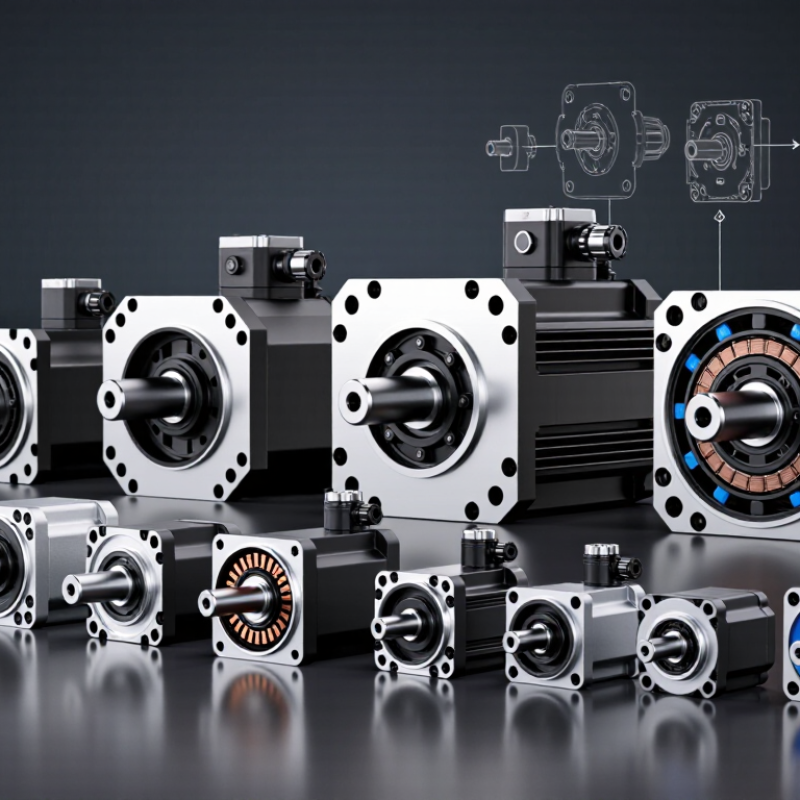
2026 Top Electric Torque Motor Types Guide
An electric torque motor is a direct-drive motor built to produce high torque at low speed. It usually connects directly to the load, removing gears, belts, and related backlash. Inside, controlled current creates a rotating magnetic field in the stator. The rotor follows this field and delivers smooth rotary force. Position feedback helps the drive adjust current precisely.
Common types include frameless motors, housed motors, and water-cooled designs. Frameless units fit compact machines but require careful mechanical integration. Housed motors simplify installation and protect internal parts. Water-cooled versions manage heat during continuous, demanding operation. Core features include high torque density, low vibration, rapid response, and strong positioning accuracy. However, performance depends on cooling, bearing design, wiring, and the control system. A powerful motor can still perform poorly when heat accumulates.
Tips: Check continuous and peak torque separately. Measure the real load inertia. Test the motor at operating temperature, not only in a short bench trial. Leave room for cable movement and service access. In my experience, noise often reveals alignment problems before software does. No selection is perfect. Recheck assumptions.
| Electric Torque Motor Type | Construction and Operating Principle | Typical Operating Profile | Core Advantages | Design Limitations | Common Applications |
|---|---|---|---|---|---|
| Motor Types and Technical Characteristics | |||||
| Frameless Radial-Flux Permanent-Magnet Torque Motor | A separate rotor and stator are integrated directly into the machine structure. Permanent magnets on the rotor interact with a three-phase stator winding to create continuous electromagnetic torque. | Low-to-medium speed; continuous rotation; torque is transmitted directly through the machine shaft or load structure. | High torque density Compact integration Low backlash Low acoustic noise | Requires accurate mechanical alignment, bearing support, rotor containment, feedback integration, and thermal design by the equipment manufacturer. | Robotic joints, gimbals, semiconductor equipment, precision rotary stages, camera platforms, and automation axes. |
| Housed Direct-Drive Torque Motor | A complete motor assembly includes the rotor, stator, bearings, housing, and often an integrated position sensor. Permanent-magnet synchronous operation produces torque without a gearbox. | Low-to-medium speed with continuous torque capability; available in sealed or protected configurations depending on the enclosure design. | Simplified installation High positioning repeatability Protected motor parts Reduced maintenance | Usually has a larger outer envelope and higher mass than a frameless motor kit. Bearing capacity and housing stiffness can limit the permissible load. | Rotary tables, indexing systems, medical equipment, packaging machinery, inspection systems, and precision automation. |
| Axial-Flux or Pancake Torque Motor | The rotor and stator face one another along the axial direction rather than the conventional radial direction. The electromagnetic air gap is approximately perpendicular to the shaft axis. | Low-speed, high-torque operation where a short axial length is more valuable than a small outside diameter. | Very short axial length Large effective radius High torque in flat packages | Axial air-gap control, structural stiffness, heat removal, and magnetic force management can be more demanding than in conventional radial-flux designs. | Turntables, robotic joints, vehicle wheel drives, compact actuators, camera systems, and low-profile motion platforms. |
| Water-Cooled Torque Motor | A liquid cooling jacket or cooling channels remove heat from the stator. The motor generally uses permanent-magnet synchronous electromagnetic operation and an external liquid-circulation system. | Continuous high-torque duty, frequent acceleration and deceleration, and applications with limited air-flow space. | High continuous torque Strong thermal stability High power density Compact packaging | Needs a pump, heat exchanger, plumbing, coolant monitoring, and protection against leaks or condensation. | Machine tools, heavy-duty rotary tables, test equipment, industrial robots, and high-duty-cycle production machinery. |
| Air-Cooled Torque Motor | Heat is dissipated through the motor housing, fins, natural convection, or forced airflow. The electromagnetic torque is normally generated by a permanent-magnet synchronous winding system. | Intermittent or moderate continuous duty where the available surface area and airflow can remove the winding and iron losses. | Simple cooling system Lower system complexity Easy serviceability | Continuous torque is more sensitive to ambient temperature, airflow, mounting orientation, and housing thermal resistance. | Light automation, laboratory stages, inspection equipment, small rotary axes, and applications without liquid-cooling infrastructure. |
| High-Speed Torque Motor | A torque motor optimized for higher rotational speed uses a mechanically reinforced rotor, balanced construction, appropriate magnet retention, and a drive system capable of higher electrical frequency. | Higher speed than conventional low-speed torque motors, while still providing direct-drive operation and useful torque over the intended speed range. | Gearless transmission Fast acceleration Reduced mechanical wear High dynamic response | Rotor stress, windage, back-electromotive-force voltage, bearing speed, switching losses, and thermal load increase as speed rises. | Spindles, centrifuges, dynamic test rigs, high-speed rotary tooling, and specialized automation equipment. |
| Definition, Operating Principles, and Core Features | |||||
| Definition | An electric torque motor is a motor designed to produce high continuous or peak torque at relatively low speed, often driving the load directly without a gearbox. It is commonly built as a permanent-magnet synchronous motor with a large diameter, multiple poles, and a short axial length. | ||||
| Electromagnetic Torque Production | A variable-frequency drive energizes the three-phase stator windings with controlled current. The resulting rotating magnetic field interacts with the rotor magnetic field, creating tangential force and shaft torque. Electronic commutation and position feedback keep the stator field correctly aligned with the rotor. | ||||
| Direct-Drive Architecture | The motor is connected directly to the load, eliminating the gearbox, belts, and mechanical transmission elements. This can reduce backlash, compliance, transmission noise, lubrication requirements, and maintenance points. | ||||
| Torque and Speed Relationship | Torque motors are generally optimized for high torque at low speed. At higher speed, back electromotive force and available voltage limit the usable torque. Operation above the base-speed region may require field-weakening control, depending on the motor and drive design. | ||||
| Position Feedback | High-precision systems commonly use a resolver, inductive encoder, optical encoder, Hall sensors, or another rotor-position device. Feedback supports commutation, speed regulation, torque control, and accurate positioning. | ||||
| Thermal Management | The main heat sources are copper losses in the windings, iron losses in the magnetic circuit, mechanical losses, and inverter-related losses. Continuous torque is strongly influenced by winding temperature, housing thermal resistance, cooling method, and ambient conditions. | ||||
| Key Selection Parameters | Compare continuous torque, peak torque duration, rated speed, maximum speed, torque ripple, allowable temperature rise, rotor inertia, radial and axial load capacity, bore size, protection rating, feedback compatibility, cooling method, drive voltage, and required acceleration. | ||||
| Primary Benefits | High torque density, efficient direct transmission, excellent dynamic response, low mechanical backlash, reduced transmission wear, low audible noise, and precise control when correctly matched with a servo drive and feedback system. | ||||
| Important Design Risks | Incorrect thermal sizing, inadequate rotor retention, poor air-gap alignment, excessive bearing loads, insufficient encoder resolution, drive-current limitations, torque ripple, demagnetization risk at excessive temperature, and unplanned emergency-stop conditions. | ||||
| Best-Fit Applications | Robotic rotary joints, direct-drive rotary tables, machine-tool axes, semiconductor manufacturing equipment, gimbals, medical imaging systems, packaging machinery, inspection systems, vehicle wheel drives, and precision positioning platforms. | ||||
Common designs include radial-flux, axial-flux, frameless, and housed motors. Radial-flux models use a cylindrical air gap. Axial-flux models use a flat, disc-shaped structure. Frameless motors offer integration freedom, while housed motors simplify installation.
Radial-flux motors suit rotary tables, robot joints, and indexing systems. They provide steady movement at low speed. Their cylindrical structure is familiar and practical. The best choice still depends on the full machine.
Axial-flux motors can produce high torque in a short, flat package. This helps when machine length is limited. Cooling and alignment require closer control. Compact does not always mean easier.
Frameless motors separate the rotor and stator from the housing. They support lightweight joints and precision gimbals. Housed motors include bearings, seals, and mounting features. They usually reduce integration work.
Direct-drive designs remove gearboxes and reduce backlash. They can improve positioning accuracy and reduce mechanical noise. However, the motor must produce high torque at low speed. Heat management becomes critical.
Compare continuous torque, peak torque, speed, duty cycle, and rotor inertia. Check encoder resolution and cooling conditions too. A motor may produce 300 N·m briefly. It might overheat at 100 N·m continuously.
Semiconductor stages need smooth motion and very low cogging. Robotic joints often require high torque density and hollow shafts. Traction systems need overload capacity and strong thermal endurance. Different machines expose different weaknesses.
Datasheets cannot reveal every vibration, temperature rise, or cable-routing issue. Test the motor under the real load and duty cycle. Record temperature changes during operation. Our first selection may be wrong. That is worth reviewing.
This guide explains what an Electric Torque Motor is, how it produces continuous torque through electromagnetic interaction, and why it is valuable in applications that require precise, stable, and efficient rotary motion. It introduces the main ways these motors are classified according to structure, control requirements, operating environment, and application needs, helping readers understand how design choices affect performance, installation, and maintenance.
The article also compares direct-drive, hollow-shaft, and frameless torque motor types, highlighting their differences in integration, space utilization, feedback compatibility, and mechanical flexibility. Key selection factors include rated and peak torque, speed range, thermal management, positioning accuracy, load capacity, efficiency, and control-system compatibility. Looking toward 2026, developments in compact construction, intelligent sensing, improved cooling, advanced motion control, and energy-efficient industrial automation are expected to expand the use of Electric Torque Motor technology in robotics, semiconductor equipment, medical systems, precision machinery, and other demanding applications.

 TTM Motor