Choosing a Torque Control Motor is not simply a matter of comparing rated torque. Global buyers must examine accuracy, response time, thermal behavior, noise, maintenance, and integration requirements. A motor that performs well on a laboratory bench may struggle beside a dusty conveyor or inside a hot packaging machine.
Werner Leonhard, a respected authority in electrical drive engineering, wrote, “The speed of a drive is controlled by controlling the torque.” This principle remains practical today. Torque control affects how smoothly a robot arm starts, how safely a hoist holds position, and how consistently a winding machine manages tension. Small errors can become visible defects, wasted material, or unexpected downtime.
This guide reviews ten leading Torque Control Motor options for international buyers. It considers servo motors, brushless designs, induction motors, and integrated drive solutions. Each choice is examined through measurable factors, including continuous torque, peak torque, feedback resolution, control bandwidth, efficiency, enclosure protection, and service access. Manufacturer documentation matters, but real operating experience matters too. Ask how the motor behaves after months of cycling, not only how it performs in a polished demonstration.
The ranking is not absolute. Application fit changes everything. A compact servo may suit a precision actuator, while a rugged induction motor may better serve a harsh production line. That distinction is easy to miss. Buyers should also confirm voltage compatibility, communication protocols, spare-part availability, and technical support in the target region. No motor is perfect. This review aims to make the trade-offs clearer before a costly purchase is made.
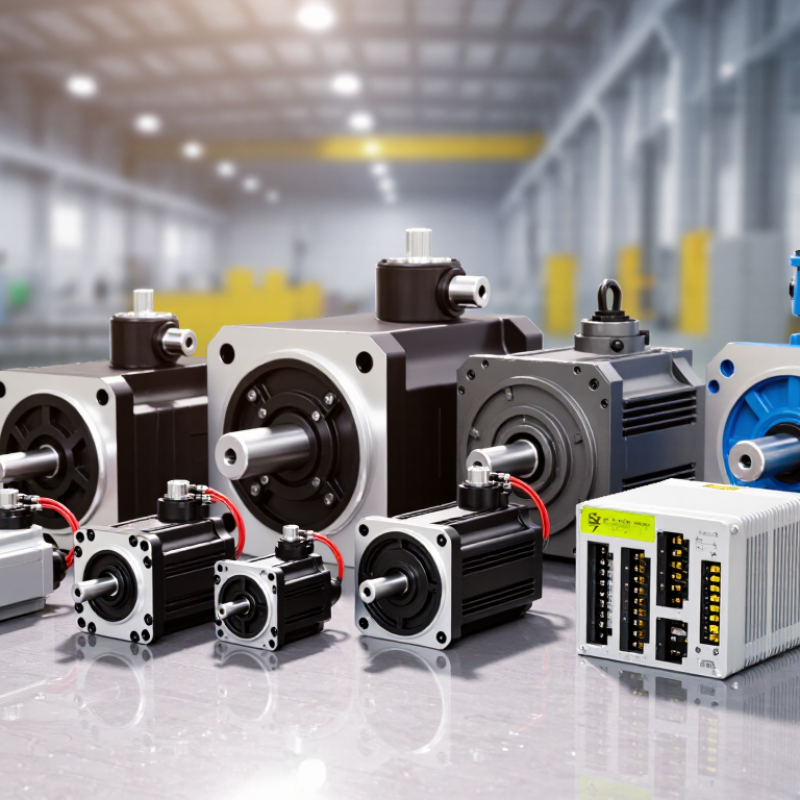
Torque control motors regulate twisting force instead of focusing only on speed. They help machines tighten, wind, press, or rotate materials without excessive stress. In practical systems, the motor receives a target torque value from the controller. It then adjusts electrical current to match that demand.
A feedback loop makes the process more accurate. A torque sensor measures shaft force, while an encoder tracks position and speed. The controller compares actual torque with the requested value and corrects the motor within milliseconds. Some systems use current estimation instead of a physical sensor. That approach reduces cost, but it can lose accuracy during temperature changes or mechanical wear.
For global buyers, motor selection should reflect the application, not just the catalog rating. A compact motor may suit a packaging roller, while a higher-capacity unit may handle a press spindle. Check continuous torque, peak torque, response time, duty cycle, voltage, and cooling requirements. Also confirm regional electrical standards and available service support.
Small details matter.
During commissioning, technicians should test torque at low, medium, and maximum loads. Calibration against a certified reference tool improves confidence. A neat specification can still mislead when friction, backlash, or flexible couplings affect the shaft. I have found that real machine behavior often differs from laboratory figures. Allowing adjustment time is wise, even when the datasheet appears complete.
Comparing the top ten torque control motors requires more than reading rated torque. Examine continuous torque, peak torque, speed range, acceleration response, and overload duration. The International Energy Agency reports that motor-driven systems consume roughly 45% of global electricity. Small efficiency losses matter. Test curves should include partial-load performance, not only rated speed.
Feedback quality strongly affects positioning and torque stability. Check encoder resolution, sampling rate, response time, and low-speed ripple. IEC 60034-30-1 provides efficiency classifications, but classification alone does not predict system performance. The U.S. Department of Energy’s motor-system guidance recommends evaluating motors under actual load conditions.
That means testing a conveyor during starts, stops, and uneven loading. Real installations are rarely tidy.
Thermal behavior deserves equal attention. Compare temperature rise, cooling method, duty cycle, enclosure protection, and ambient limits. The IEA’s Energy Efficiency 2023 analysis links efficient motor systems with major industrial energy-saving potential. However, published savings can look optimistic when controllers, cables, and mechanical loads are excluded. I would question any comparison without measured data. A motor with impressive peak torque may still perform poorly at crawl speed. Check noise, vibration, regenerative handling, and maintenance access across regional power supplies. Some specifications remain incomplete, and buyers should request independent test records before making a global purchase.
Top 10 Torque Control Motors for Global Buyers
Ten torque control motor types serve different industrial demands. Servo motors provide precise torque for robotic arms, CNC tools, and packaging machines. Stepper motors suit printers, dosing equipment, and light automation. Brushless DC motors deliver efficient control in conveyors, fans, and battery-powered systems. AC induction motors with variable-frequency drives handle pumps, compressors, and mixers. Synchronous motors support constant-speed compressors and high-efficiency production lines. Torque motors produce direct rotary force for winding, indexing, and film processing. Switched reluctance motors tolerate hot, dusty areas such as pumps and material handling systems. Hysteresis motors offer smooth, quiet operation in laboratory instruments and timing devices. Universal motors create high starting torque for portable tools and compact equipment. Geared motors reduce speed while increasing output torque in hoists, gates, and conveyor drives.
Tips: Check rated torque, peak torque, speed range, duty cycle, cooling method, and feedback requirements. Confirm voltage, frequency, enclosure rating, and local certification before ordering. A motor that performs well in a clean workshop may fail beside dust, moisture, or heat. Installation experience matters, too. Poor tuning can cause vibration, noise, and unnecessary energy use. One common mistake is choosing only by maximum torque. Real loads often change during acceleration, stopping, or material contact. Leave a practical safety margin, but avoid oversized motors that waste space and power. No selection is perfect. Field testing may reveal assumptions that laboratory data misses.
Top 10 Torque Control Motors for Global Buyers
Global buyers should rate torque control motors by measured performance, not catalog promises. Check continuous torque, peak torque, speed range, overload capacity, and response time. A motor rated for 20 Nm may deliver less under heat. Test conditions matter.
Look for documented compliance with IEC or NEMA requirements, depending on the destination market. Confirm voltage, frequency, insulation class, duty rating, and IP protection before ordering. In humid plants, an IP65 enclosure can prevent costly downtime. In commissioning work, I also verify encoder accuracy and braking behavior. Small errors become visible during rapid reversals.
Supplier quality needs equal attention. Request test reports, traceable serial records, spare-part policies, and realistic delivery schedules. Ask whether technical support covers your time zone. A low purchase price can hide shipping delays, imported components, or difficult repairs. Calculate total cost through energy use, controller compatibility, installation labor, maintenance, and expected service life. A five-year estimate is more useful than the invoice alone.
A perfect ranking is unrealistic. Application data changes the result. Some buyers also overlook ambient temperature and load inertia. That mistake is common. Comparing ten motors on identical test conditions gives a fairer view, but field performance may still differ. Reviewers should disclose test limits, unavailable data, and revised assumptions. That honesty supports better purchasing decisions.
Comparative buyer score based on torque controllability, efficiency, international standards coverage, supplier qualification requirements, and estimated five-year total cost of ownership. Scores are normalized benchmarks for motor technology categories rather than company or brand data.
Reference framework: IEC 60034-1 for rotating electrical machines, IEC 60034-5 for enclosure protection, IEC 60034-30-1 for motor efficiency classes, and ISO 9001 for supplier quality systems. A higher score indicates stronger overall suitability for global torque-control applications.
Selecting among the top 10 torque control motors requires more than comparing catalog torque. Start with the real operating profile: required torque, speed range, acceleration, duty cycle, and load inertia. Measure the load.
A motor that performs well at 1,500 rpm may overheat during repeated starts. Check continuous torque, peak torque, stall limits, and thermal derating at the actual ambient temperature. Test under heat. Feedback also matters. Encoders improve position and torque regulation, while resolvers can remain dependable in vibration and harsh industrial environments. Match the feedback device with the controller, cable length, and required accuracy.
Review voltage tolerance, braking behavior, shaft dimensions, mounting space, protection rating, and maintenance access. For dusty or wet areas, verify the enclosure rating through documented test evidence. Ask suppliers for efficiency curves, temperature-rise data, vibration limits, and sample inspection records. Certifications should match the destination market and installation environment.
Field experience shows that selection errors often begin with optimistic assumptions. A spreadsheet can still lie. Engineers sometimes calculate torque without including friction, gearbox loss, or emergency stops. Leave practical margin, but avoid excessive oversizing, which can increase cost and reduce control sensitivity. Run a pilot test with the intended controller and load. Record noise, temperature, response time, and torque stability across several operating cycles. Small differences become important after thousands of cycles. Recheck the choice when production conditions change.
| Rank | Motor Type | Typical Continuous Torque | Peak Torque Capability | Typical Speed Range | Torque Feedback | Control Precision | Best-Suited Applications | Key Selection Consideration |
|---|---|---|---|---|---|---|---|---|
| 1 | Permanent-Magnet AC Servo Motor | 0.5–500 N·m | Up to 2–3× rated torque for short durations | 0–6,000 rpm | Incremental or absolute encoder | Very high | Robotics, machine tools, packaging, precision assembly | Choose when accurate torque, position, and rapid dynamic response are all required. |
| 2 | AC Induction Motor with Vector Drive | 2–10,000 N·m | Typically 1.5–2× rated torque | 0–3,600 rpm | Sensorless or encoder-based vector feedback | High | Conveyors, pumps, compressors, hoists, heavy machinery | A strong general-purpose option where durability, availability, and cost matter. |
| 3 | Brushless DC Motor with Closed-Loop Controller | 0.01–100 N·m | Up to 2–3× rated torque intermittently | 500–10,000 rpm | Hall sensors, encoder, or resolver | High | Fans, pumps, laboratory equipment, mobile equipment, automation | Select for compact size, efficient operation, and moderate-to-high speed control. |
| 4 | Permanent-Magnet Synchronous Motor | 5–20,000 N·m | Typically 1.5–2.5× rated torque | 0–6,000 rpm | Resolver, encoder, or sensorless estimation | Very high | Industrial drives, elevators, compressors, electric traction | Consider when high efficiency and high torque density are more important than lowest initial cost. |
| 5 | Direct-Drive Torque Motor | 10–10,000 N·m | Approximately 1.5–2× rated torque | 0–1,000 rpm | High-resolution encoder or resolver | Extremely high at low speed | Rotary tables, gimbals, winding systems, precision indexing | Use when eliminating gears, backlash, and mechanical transmission losses is valuable. |
| 6 | Stepper Motor with Closed-Loop Control | 0.1–20 N·m | Usually 1.2–1.5× rated torque | 0–2,000 rpm | Encoder-based position and load monitoring | Medium to high | 3D printers, indexing systems, CNC equipment, laboratory automation | Suitable for economical positioning with controlled stall detection and moderate torque demand. |
| 7 | Switched Reluctance Motor | 5–5,000 N·m | Typically 1.5–2× rated torque | 0–6,000 rpm | Rotor-position sensor or sensorless control | High, depending on controller tuning | Pumps, compressors, traction systems, harsh industrial environments | Consider for high-temperature or high-speed duty where rotor magnets are undesirable. |
| 8 | Hysteresis Synchronous Motor | 0.01–50 N·m | Limited short-term overload capability | 300–3,600 rpm | Usually open-loop or encoder-assisted | Medium | Audio equipment, precision instruments, small constant-speed drives | Choose for smooth, quiet rotation and stable synchronization rather than high overload torque. |
| 9 | Universal Motor with Electronic Torque Regulation | 0.05–20 N·m | Approximately 1.5–2× rated torque for short periods | 3,000–30,000 rpm | Current sensing; optional speed or position feedback | Medium | Portable tools, compact appliances, intermittent high-speed equipment | Best for low-cost, high-speed applications where brush wear and noise are acceptable. |
| 10 | Electro-Hydraulic Servo Motor Drive | 100–100,000 N·m equivalent output torque | Often 1.5–2× continuous rating, subject to system limits | 0–500 rpm | Pressure, position, and torque transducers | High | Presses, injection molding, construction equipment, test benches | Select when very high force or torque is needed in a compact package and hydraulic infrastructure is available. |
Compare continuous torque, peak torque, speed range, acceleration, and overload duration. Rated torque alone is insufficient. Check performance at partial load and low speed.
Actual loads reveal heating, vibration, response delays, and torque instability. Test conveyors during starts, stops, reversals, and uneven loading. Real installations are rarely tidy.
Check encoder resolution, sampling rate, response time, and low-speed ripple. The feedback device must match the controller, cable length, and accuracy requirements. Small errors grow after thousands of cycles.
Review temperature rise, cooling method, duty cycle, enclosure protection, and ambient limits. A motor may deliver strong peak torque but overheat during repeated starts. Test under heat. Include thermal derating at the actual site temperature.
Confirm voltage, frequency, insulation class, duty rating, braking behavior, and mounting dimensions. Check shaft size, available space, cable requirements, and protection rating. For wet or dusty areas, request documented enclosure test evidence.
Request test reports, traceable serial records, spare-part policies, and realistic delivery schedules. Confirm technical support coverage for the installation time zone. Delivery promises can be optimistic. Independent records provide stronger evidence.
Include energy use, controller compatibility, installation labor, maintenance, shipping, and expected service life. A five-year estimate is more useful than the invoice. A low purchase price may hide difficult repairs or delayed parts.
Measure torque, speed, acceleration, duty cycle, friction, gearbox losses, and load inertia. Leave practical margin, but avoid excessive oversizing. Oversizing can raise costs and reduce control sensitivity. Run a pilot test with the intended controller and load.
No ranking stays perfect because applications, climates, controllers, and loads differ. Compare motors under identical conditions, then verify field performance. Disclose missing data and uncertain assumptions. A spreadsheet can still mislead.
This guide explains what a Torque Control Motor is and how it regulates mechanical force by managing torque output, speed, and load response. It introduces the key performance factors that global buyers should compare, including torque range, control accuracy, efficiency, duty cycle, thermal performance, overload capacity, feedback options, and compatibility with automation systems. The article also reviews ten major torque control motor types and highlights their typical applications in manufacturing, robotics, conveyors, winding equipment, packaging, medical machinery, and other industrial systems.
For international purchasing, the guide outlines essential criteria such as voltage and frequency ratings, environmental protection levels, safety requirements, certification standards, supplier reliability, maintenance support, delivery capability, and total cost of ownership. It concludes with a practical selection framework for matching a motor to specific operating needs, considering load characteristics, operating environment, required precision, installation limits, control methods, lifecycle costs, and future expansion.
